




Kofeinske žvakaće gume su se posljednjih godina iz nišnog proizvoda probile u mainstream. Stane u svaki džep, djeluje brzo i ne opterećuje želudac. Istovremeno, postoje opravdane kritike ove kategorije proizvoda, a ovaj vodič pokriva i njih i prednosti. Na kraju ćeš znati kako djeluju, kako ih mudro koristiti i kako prepoznati dobar proizvod.
TL;DR: Ukratko
- Dio kofeina apsorbira se izravno kroz oralnu sluznicu. Zbog toga žvakaća guma djeluje brže od kave i ne opterećuje želudac.
- Najveća praktična prednost je precizno doziranje. Kod kave se sadržaj kofeina razlikuje, ali kod žvakaće gume količina je navedena na pakiranju.
- Prema EFSA-i, pojedinačne doze do 200 mg i do 400 mg tijekom dana smatraju se sigurnima za zdrave odrasle osobe.
- Kritike udruga za zaštitu potrošača su opravdane: doze se uvelike razlikuju ovisno o proizvodu, a dnevna granica se prekorači brže nego što mnogi shvaćaju.
Kako djeluje kofeinska žvakaća guma?
Dok žvačeš, kofein se oslobađa iz baze žvakaće gume i širi se po tvojim ustima. Dio ga ulazi u krvotok izravno kroz oralnu sluznicu, zaobilazeći želudac i crijeva. Ostatak se proguta i probavi kao i obično.
U mozgu, kofein tada radi ono što uvijek radi: blokira receptore za adenozin – tvar koja signalizira umor. Signal više ne dopire do tebe, pa se osjećaš budnije i usredotočenije. Detaljnije smo objasnili kako to funkcionira tijekom treninga u našem Vodiču za prije treninga.
To nudi dvije prednosti u svakodnevnom životu. Prvo, učinci nastupaju brže nego s napitkom. Drugo, nemaš ništa u želucu, što je pravi plus neposredno prije treninga.
Kofeinska žvakaća guma: Kako je pravilno koristiti
Ovdje većina ljudi radi iste pogreške. Kofeinska žvakaća guma nije samo žvakaća guma za razonodu – to je proizvod s odmjerenom dozom.
- Žvači oko 10 do 15 minuta: Tijekom tog vremena, većina kofeina se oslobađa. Žvakanje dulje od toga neće imati nikakav dodatni učinak.
- Ne gutaj: Baza žvakaće gume ostaje u tvojim ustima i zatim se baca.
- Jednu po jednu: Pričekaj da učinci nastupe umjesto da uzmeš dvije ili tri za svaki slučaj.
- Ne kombiniraj ih: Žvakaća guma plus kava plus energetsko piće brzo se zbroje na više nego što si ikada planirao.
- Koristi je strateški: Prije teškog treninga, na dugoj vožnji ili kada gubiš fokus. Ne koristi je iz navike tijekom dana.
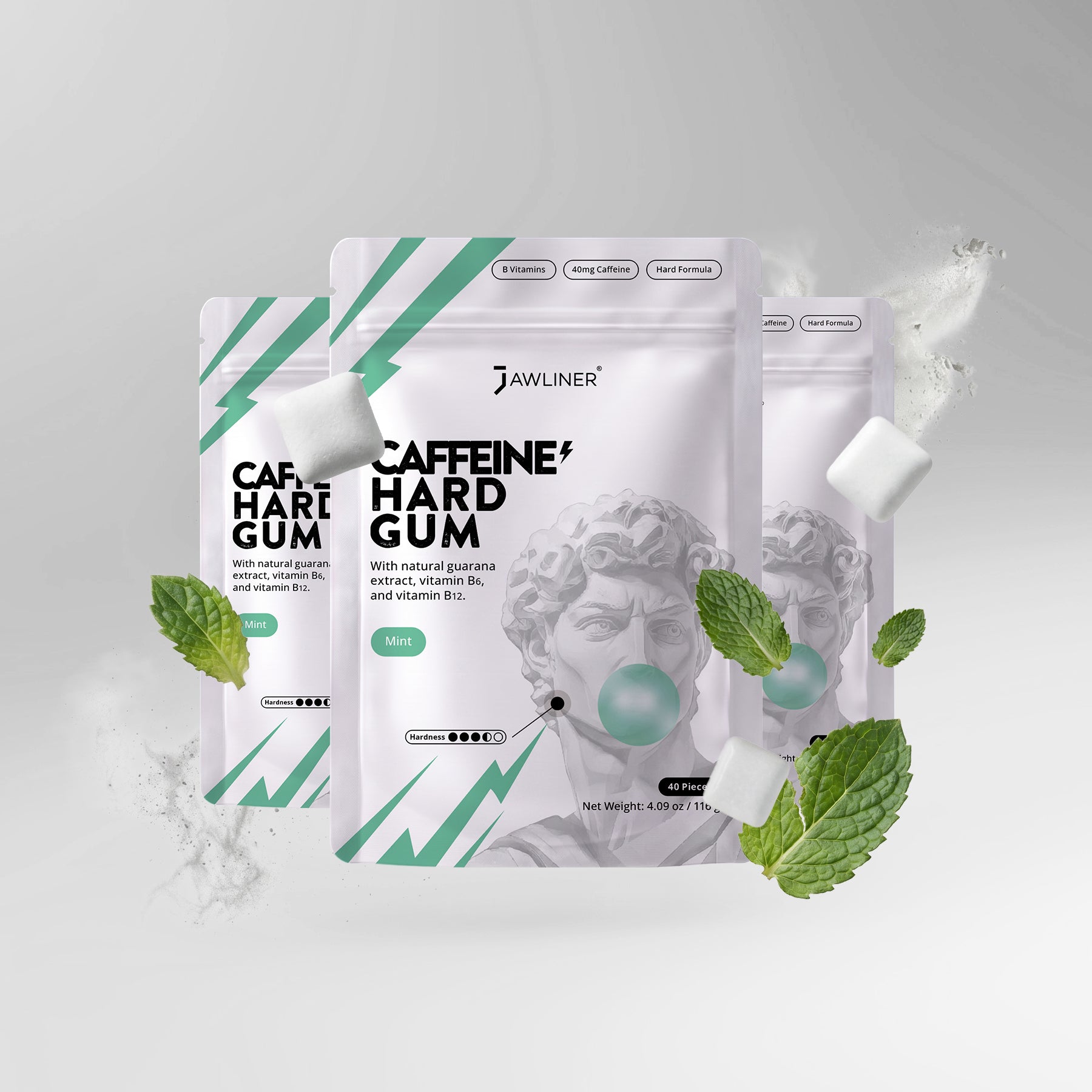
JAWLINER Chewing Gum Hard with Caffeine ima dodatnu posebnu značajku. Baza žvakaće gume namjerno je tvrda jer guma služi i kao alat za trening tvojih mišića za žvakanje. Stoga se drži 10 do 15 minuta i napravi jednodnevnu pauzu između sesija kako bi se tvoji mišići oporavili. Ovih nekoliko minuta je ionako više nego dovoljno da kofein počne djelovati.
Kritike udruga za zaštitu potrošača
Izvješća o kofeinskim žvakaćim gumama nisu sva pozitivna – i to iz razumljivih razloga. Centar za zaštitu potrošača Sjeverne Rajne-Vestfalije testirao je 49 kofeinskih proizvoda i identificirao nekoliko kritičnih točaka.
Prva se tiče transparentnosti. Sadržaj kofeina često nije odmah vidljiv, već je skriven u sitnom tisku na poleđini pakiranja. Druga se tiče varijacija. Među testiranim kofeinskim žvakaćim gumama, raspon se kretao od 30 do 60 mg po komadu – do dvostruke količine – što otežava praćenje ukupnog unosa. Treća se tiče oglašavanja, koje je često usmjereno na tinejdžere, koji će vjerojatnije podcijeniti rizike predoziranja.
Ove su kritike valjane i primjenjuju se na cijelu kategoriju proizvoda. Svatko tko koristi kofeinsku žvakaću gumu trebao bi ih biti svjestan. Iz toga možemo izvesti korisnu kontrolnu listu za kupnju:
- Je li sadržaj kofeina jasno naveden na prednjoj strani? Ako ga moraš tražiti, to nije dobar znak.
- Je li doza umjerena? Što je niža pojedinačna doza, to je lakše kontrolirati tvoj dnevni unos.
- Je li upozorenje jasno? Upozorenje o visokom sadržaju kofeina i ograničenjima za djecu, trudnice i dojilje trebalo bi biti istaknuto na pakiranju.
- Bez šećera ili ne? Zaslađeni proizvodi dodaju nepotreban šećer sadržaju kofeina.
- Je li proizvod prikladan za ciljanu publiku? Pakiranje i marketing trebali bi biti usmjereni na odrasle, a ne na 12-godišnjake.
JAWLINER Chewing Gum Hard with Caffeine, s 40 mg po komadu, spada u donji dio tržišnog raspona i bez šećera je. Količina je jasno navedena na pakiranju, kao i upozorenje. To je namjeran dizajnerski izbor, jer je doza koju je lako kontrolirati vrjednija od najjačeg udarca.
Tko bi trebao izbjegavati kofeinsku žvakaću gumu
Kofeinska žvakaća guma nije prikladna za:
- Djecu i adolescente
- Trudnice i dojilje
- Oprez se također savjetuje osobama s kardiovaskularnim bolestima, visokim krvnim tlakom, srčanim aritmijama, anksioznim poremećajima, napadajima panike i ozbiljnim problemima sa spavanjem.
- Kofein također može nepovoljno djelovati s određenim lijekovima.
Ako pripadaš jednoj od ovih skupina ili nisi siguran, posavjetuj se s liječnikom prije upotrebe umjesto da jednostavno isprobaš.
Često postavljana pitanja o učincima i upotrebi kofeinske žvakaće gume
Izvori
- Centar za savjetovanje potrošača NRW (2024). Od vode do žvakaće gume: Sve više proizvoda s dodanim kofeinom. Tržišna studija 49 kofeinskih proizvoda.
- EFSA (2015). Znanstveno mišljenje o sigurnosti kofeina. Europska agencija za sigurnost hrane.
Napomena
Ovaj članak služi samo u opće informativne svrhe i nije zamjena za medicinski savjet. Visok sadržaj kofeina: ne preporučuje se djeci, trudnicama i dojiljama.


