




Your face looks rounder than it used to, but the scale has barely moved. Or it's full in the morning and almost normal by evening. Water and fat look similar in the mirror, but they come about in completely different ways. And that's exactly why the same measures don't work on both. Here's how to tell which one you're dealing with.
At a Glance
- Water retention changes within hours; facial fat changes over weeks and months.
- The fastest clue is the time of day: if you look noticeably fuller in the morning than in the evening, you're usually dealing with water.
- Fat feels soft and even and leaves no dent. Retained fluid feels taut and can be pressed in briefly.
- For many people it's both at once. In that case it pays to sort out the water first, because that's where you see visible change within a few days.
The Quick Test: Three Questions
Before you dive into causes, answer these three questions. In the vast majority of cases they'll point you to the right conclusion.
Question 1: How fast did the change come on?
Overnight or within a few days clearly points to water. Over the course of months points to fat. Fat tissue doesn't build up in 48 hours.
Question 2: Does it look different in the morning than in the evening?
A clear difference over the course of the day is the most typical sign of retained fluid. Lying down overnight distributes fluid differently, and the effect is strongest in the morning. Facial fat looks the same in the evening as it does in the morning.
Question 3: What happens if you press on your cheek for a few seconds?
If a visible dent stays behind briefly, that points to fluid in the tissue. If the spot springs straight back, it's more likely fat and tissue.
Two out of three answers pointing the same way are enough for an initial assessment.
How to Recognise Water Retention
Retained fluid in the face has a very recognisable pattern:
- It fluctuates over the course of the day and is most pronounced in the morning.
- It mainly affects the eye area, the lids and the upper cheeks.
- The skin looks taut and smooth, sometimes slightly shiny.
- It responds to external triggers: a lot of salt the day before, alcohol, too little sleep, hormonal fluctuations, a long flight.
- It can disappear again on its own within a day.
If that sounds like your face, you'll find the causes and the concrete countermeasures in detail in our article on a puffy face.
How to Recognise Facial Fat
Fat behaves the opposite way on almost every count:
- It develops slowly and stays constant, regardless of the time of day or the day before.
- It spreads evenly across the cheeks, chin and jaw area, often together with a softer transition to the neck.
- It changes in parallel with your body weight, not independently of it.
- It feels soft but leaves no dent when pressed.
- It doesn't respond to salt, water or a short night.
What you can do about it, and why targeted fat loss in a single spot doesn't work, is covered in our article on losing face fat.
Water and Fat Side by Side
Time course: Water changes within hours. Fat changes over weeks to months.
Daily rhythm: Water is most pronounced in the morning. Fat stays constant throughout the day.
Press test: Water leaves a brief dent. Fat springs straight back.
Areas affected: Water sits mainly on the lids and upper cheeks. Fat spreads across the cheeks, chin and jawline.
Triggers: Water responds to salt, alcohol, sleep and hormones. Fat responds to your energy balance over a longer period.
Time until visible change: Water can recede in one to three days. Fat takes several weeks.
Why Your Face Looks Heavier Than Your Body
Plenty of people don't recognise themselves in the mirror even though their weight is completely normal. There are several explanations for that, and none of them has anything to do with discipline:
- Fat distribution is genetically determined. Some people store fat on the belly first, others in the face. That can't be influenced.
- Water hits the face disproportionately. The tissue on the lids and cheeks is particularly loose, which is why any retention shows up there immediately.
- Bone structure and chewing muscles shape the contour. Strong chewing muscles or a rounder jaw angle make the face look fuller, without any additional fat.
- Even at a low body fat percentage the jawline can look soft if the transition to the neck has little tension.
Often It's Both at Once
This is the case most guides leave out. If you've gained weight over months and also eat a lot of salt, sleep little or drink in the evenings, you have both. You can tell because your face is noticeably fuller in the morning than in the evening, yet still isn't as slim in the evening as it was a year ago.
The practical order is then clear: water first, fat second. Not because water matters more, but because that's where you see a result within days — and only then can you judge how much of the change is actually fat.
What Helps in Each Case, in Short
For water it comes down to salt, sleep, alcohol and movement. The retention is usually harmless and self-regulating; it often disappears after just one or two quiet days. The detailed version with all the triggers is in our article on a puffy face.
For fat the route runs through your overall body fat percentage. Losing fat in one specific spot doesn't work; that isn't physiologically possible. The change in your face usually only becomes visible once your overall body fat percentage drops noticeably.
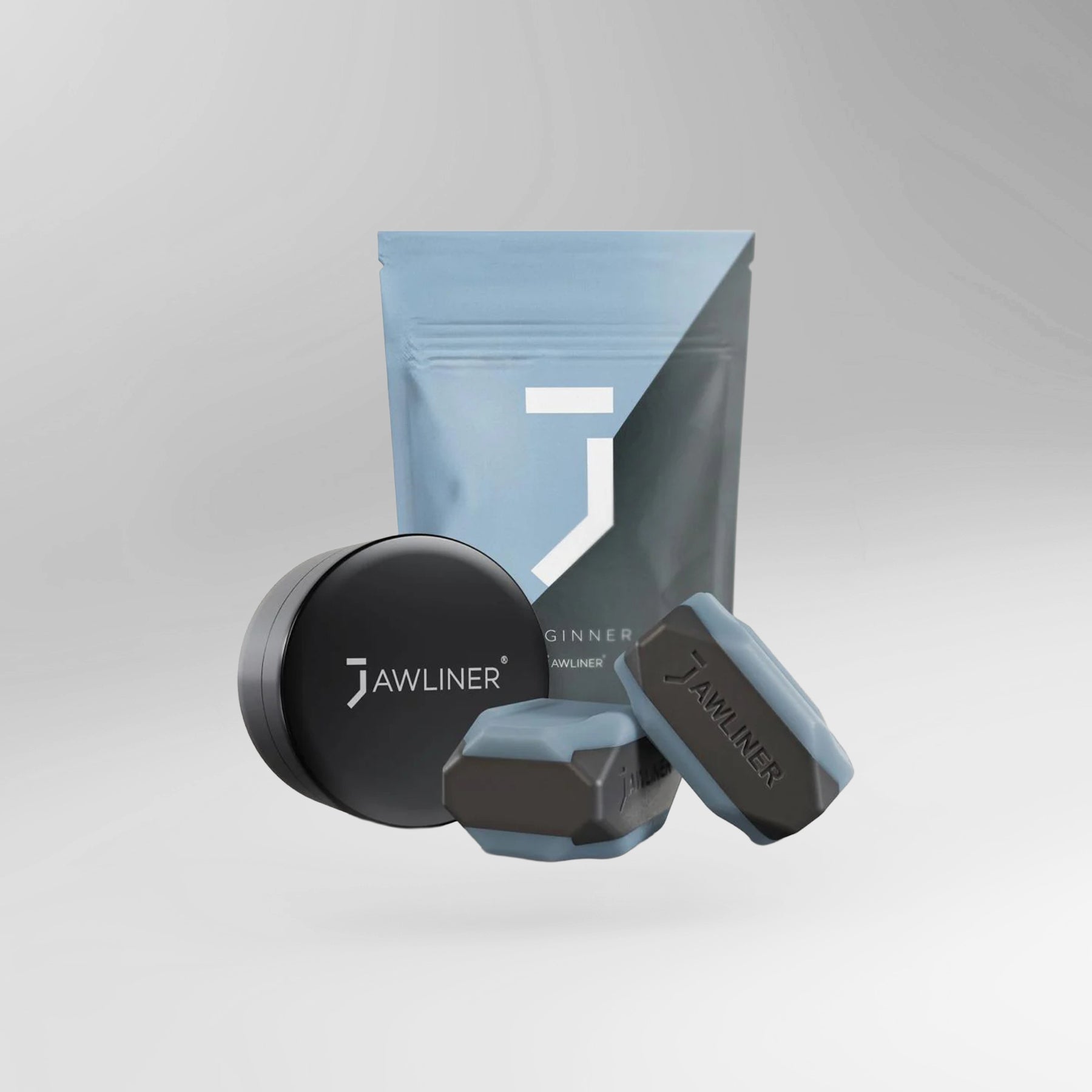
What you can influence independently of that is the definition of the jaw area. With the JAWLINER you train the chewing muscles like any other muscle. That changes the contour, but it doesn't burn fat. Anyone promising you otherwise is selling you a story.
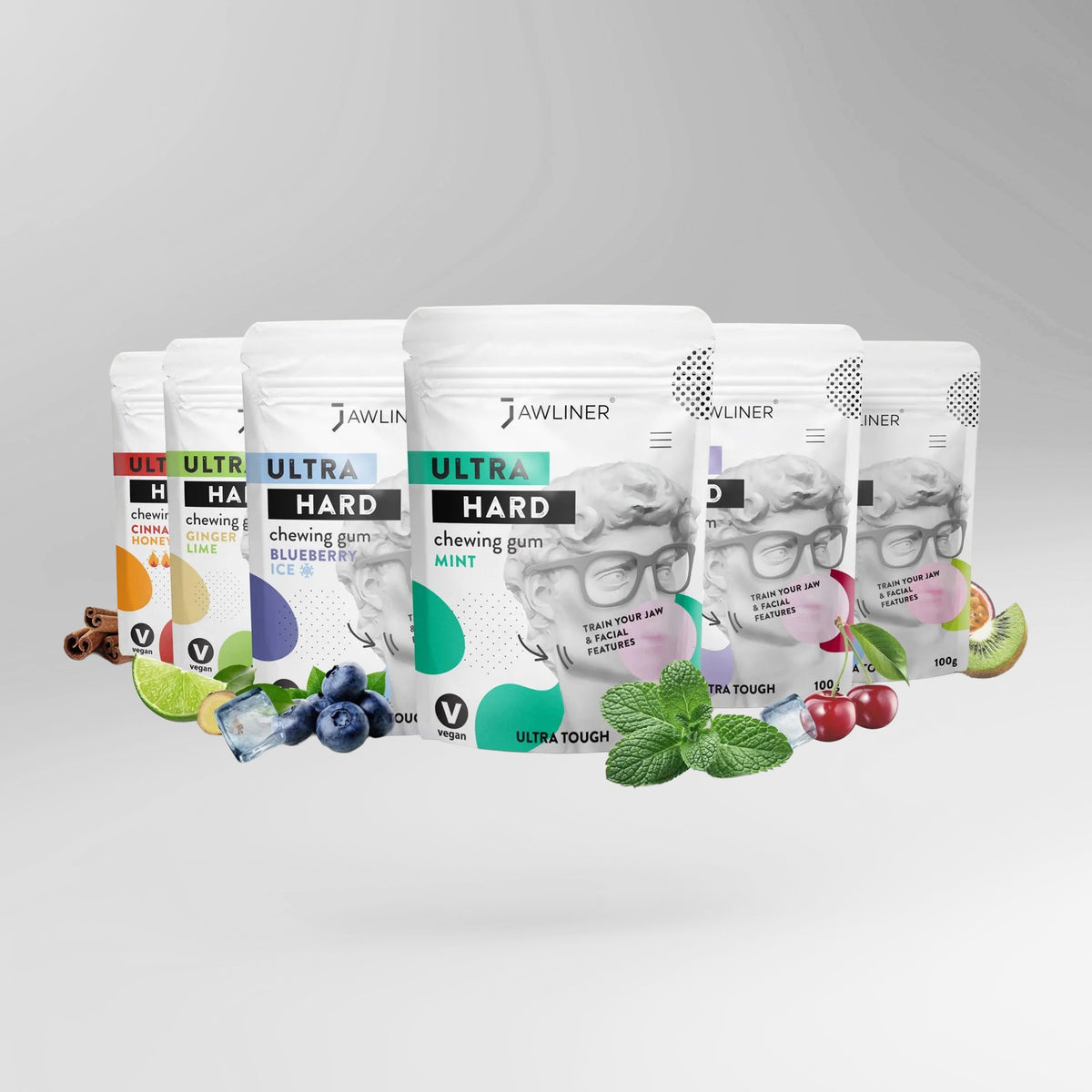
If you would rather train on the side, there is the fitness chewing gum. Same muscle, same principle, just without a device in your mouth. The same caveat applies: it shapes the contour and burns no fat.
When to Have It Checked by a Doctor
In these cases the change belongs in medical hands, not in a guide:
- Only one side of the face is swollen. That points more towards a tooth or an infection.
- The swelling comes on suddenly and without any recognisable trigger.
- Pain, fever, reddened skin or breathing difficulties come with it.
- You're taking new medication, particularly corticosteroids.
- Your face becomes noticeably rounder over weeks while nothing changes on your arms and legs.
Frequently Asked Questions
The questions most frequently asked on this topic, answered briefly.
Note
This article is for general information purposes only and is not a substitute for medical advice. If you have sudden, painful or persistent swelling, consult a medical practice.


