



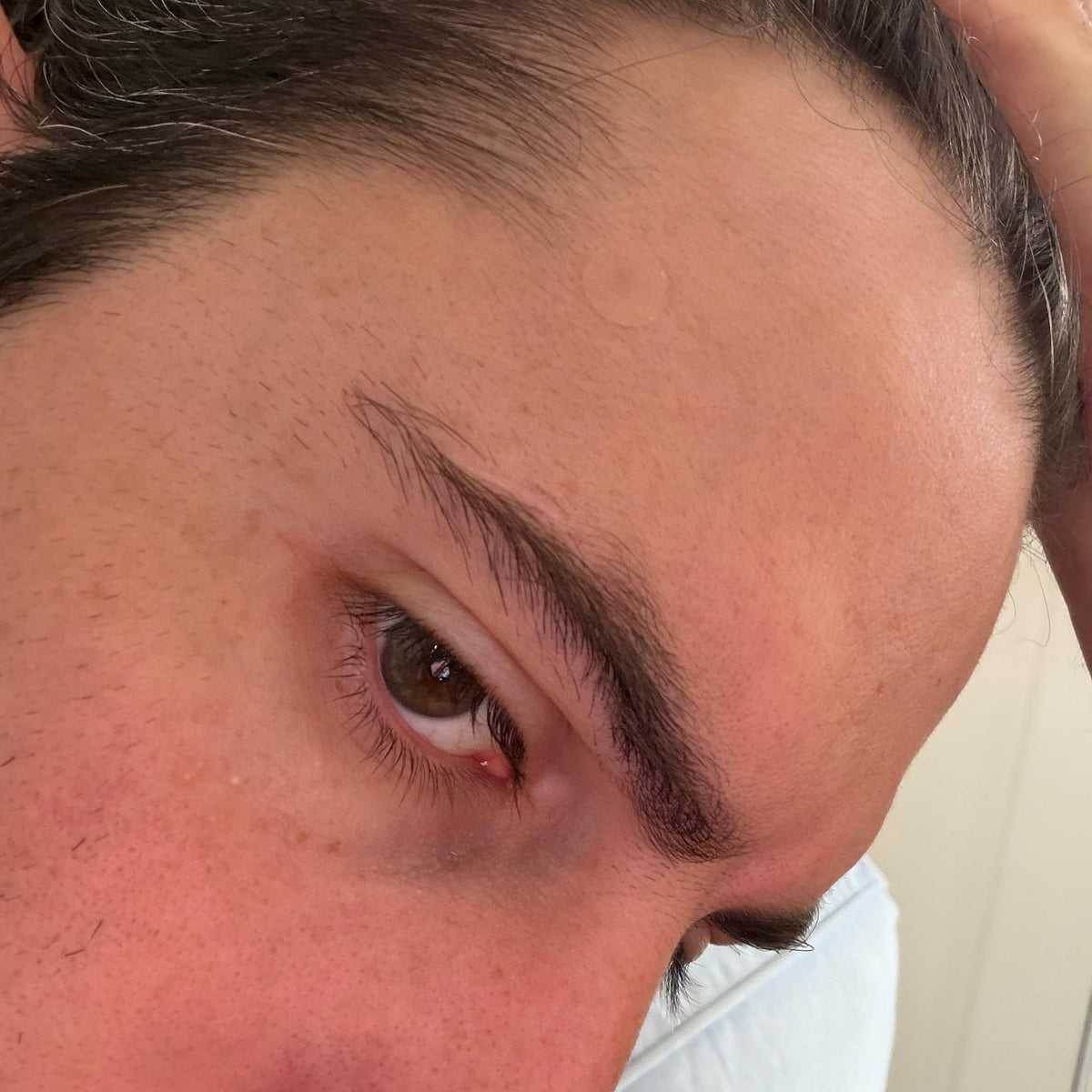
It's barely visible, but you definitely feel it. Under the skin sits a hard, tender lump that won't be squeezed out and won't go away either. Blind pimples are the most unpleasant kind of breakout, and they stick around far longer than an ordinary pimple. Why that is, how long it takes and what actually helps — let's go through it.
TL;DR: Blind Pimples at a Glance
- A blind pimple has no opening to the surface of the skin. That's why nothing comes out, no matter how hard you press.
- It hurts because the inflammation sits deep in the tissue and puts pressure on surrounding nerve endings.
- Healing usually takes one to three weeks — considerably longer than a surface pimple.
- Squeezing reliably makes it worse and is the most common cause of permanent scarring.
What Is a Blind Pimple?
A blind pimple forms the same way every other pimple does. A pore clogs with sebum and dead skin cells, bacteria multiply, the tissue becomes inflamed. The decisive difference is the depth:
- With a normal pimple, the inflammation sits just below the surface and forms a visible white head after one or two days. With a blind pimple it sits deeper in the skin, and no exit to the outside develops. That's why you often only see redness or a slight bulge, while feeling a firm nodule underneath.
- Several terms get used for this in everyday language. Under-the-skin bumps, cystic pimples or simply pimples under the skin all mean the same thing. Two things look similar but work differently: milia are small white keratin bumps without inflammation, and closed comedones are clogged pores that aren't inflamed and therefore aren't painful. If it hurts, you're talking about a blind pimple.
Why Blind Pimples Hurt
The pain is what sets these pimples apart from all the others, and there's a logical reason for it.
The inflammation sits in a layer of skin with considerably more nerve endings than the surface. The inflamed tissue swells but has no room to expand and no way out. The pressure that builds up irritates the surrounding nerves. That's exactly why even a light touch hurts, while a surface pimple is usually just annoying.
On top of that: the larger the inflammation, the stronger the pressure. A blind pimple can therefore get more painful over several days before it gets better.
How Long Does a Blind Pimple Last?
That's the question most people really care about, and the honest answer is: longer than you'd like:
- A surface pimple is usually done after three to seven days. A blind pimple generally needs one to three weeks. In stubborn cases, a cystic pimple can persist for months without ever reaching the surface.
- The reason lies in the biology. Because no exit exists, the body can't transport the contents outward. Instead, the immune system has to break the inflammation down on the spot, and that simply takes longer. Sometimes the body encapsulates the whole thing, leaving a firm nodule you can still feel weeks later, even though the inflammation subsided long ago.
And afterwards? Expect redness that stays visible for another two to four weeks. The stronger the inflammation was and the more you messed with it, the longer it takes.
Why You Should Never Squeeze
With a ripe pimple that has a visible white head, careful squeezing is at least up for debate. With a blind pimple, it isn't.
There is simply nothing that could come out. The contents sit deep, with intact skin on top. What the pressure actually does is the opposite of what you want. The inflammation gets pushed into the surrounding tissue and grows larger. One nodule often turns into two.
Then there's the scarring risk. Because the inflammation sits deep, it reaches into the skin layers where scars form in the first place. Blind pimples are therefore among the most common causes of permanent acne scars, and squeezing speeds that up. You can read why squeezing is generally the worse option in our article on popping pimples.
And the question that comes up so often — when does a pimple like this finally come to a head: a blind pimple doesn't ripen in that sense. Either it eventually breaks through on its own, or the body breaks it down without anything ever reaching the surface.
What Actually Helps With Blind Pimples
The measures that work are unspectacular:
- Warmth instead of pressure: A warm, damp compress for about ten minutes, two to three times a day, boosts circulation and can help the pimple come to the surface.
- Gentle active ingredients instead of a radical cure: Salicylic acid dissolves the buildup inside the pore, tea tree oil counteracts bacterial colonisation. Both need time and don't work overnight.
- Cooling for pain: If the spot hurts badly and is swollen, cold relieves the pressure short-term.
- Hands off: The hardest point, but the most important one. Every touch prolongs the healing.
- Don't over-treat: Aggressive scrubbing, exfoliants and drying products irritate the skin further and make it worse.
- Patience: Most blind pimples disappear on their own if you leave them alone.
Stay away from home remedies like toothpaste, lemon juice or baking soda. They irritate the skin without changing anything about the inflammation deep down.
Where Blind Pimples Show Up Most Often
In men, the chin, jawline and neck are hit hardest. That's no coincidence, because there are particularly many sebaceous glands there, and daily shaving irritates the skin on top of that. The forehead and the sides of the nose are typical spots too.
If your breakouts are concentrated around the chin and jaw, it's worth taking a look at your shaving routine. You can read what else plays a role there in our article on chin pimples.
Why a Pimple Patch Doesn't Help Here
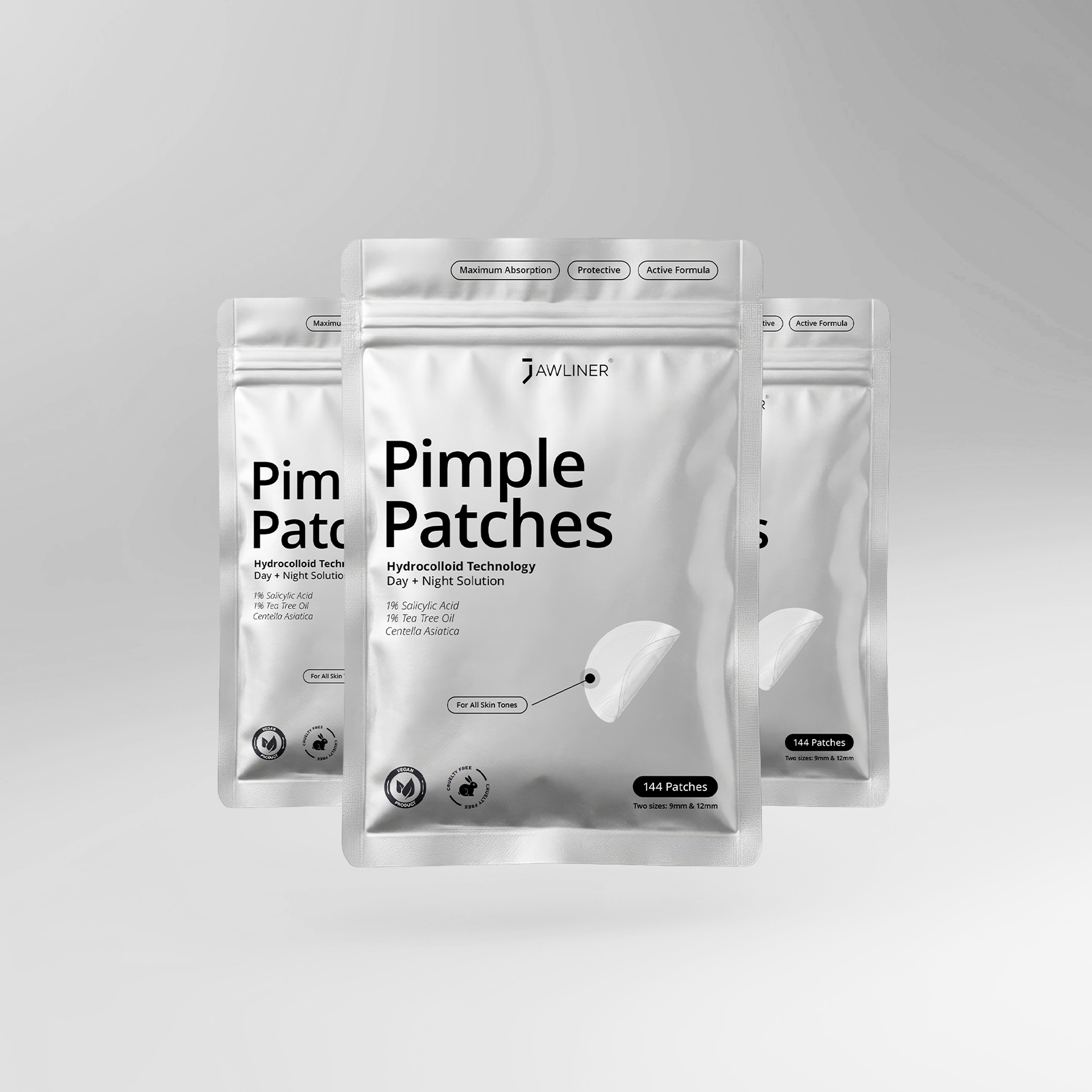
One point we should state openly as a manufacturer of pimple patches: with blind pimples, a patch does little.
- Hydrocolloid works by absorbing fluid from an open spot. With a blind pimple there is no fluid at the surface that could be absorbed. The patch can cover the spot and keep you from pressing on it, which is worth something. But it doesn't draw anything out and doesn't speed up healing.
- There is, however, one moment where it becomes useful. As soon as the pimple breaks through on its own and an open spot forms, a patch is exactly right. It then protects the wound, absorbs secretions and lowers the risk of a pimple mark being left behind. That's precisely what the JAWLINER Pimple Patch is made for.
When You Should See a Doctor
Most blind pimples are unpleasant but harmless. In these cases you should seek medical advice:
- The nodules keep coming back in the same spot.
- The pimple is very large, severely painful or feels hot.
- Fever or a general feeling of illness comes with it.
- Scars are already forming.
- You have painful nodules in your armpits, groin or under your chest. That can point to hidradenitis suppurativa, a chronic inflammatory skin condition that is treated differently from ordinary acne.
- The breakouts are weighing on you psychologically.
A dermatology practice has treatment options that aren't available to you at home. And the earlier stubborn cases are treated, the lower the scarring risk.
Frequently Asked Questions About Blind Pimples
Duration, treatment and how they differ from other breakouts: here are short answers to the questions most frequently asked about blind pimples.
Note
This article is for general information purposes only and is not a substitute for medical advice. If you have severe, painful or persistent acne, consult a dermatology practice.


