



Kinpuistjes hebben een vervelende gewoonte. Ze komen vaak in clusters en blijven op dezelfde plek verschijnen. Soms is het één rode plek, andere keren een hele rij langs de kaaklijn. Hier leggen we stap voor stap uit waarom juist de kin zo gevoelig is voor puistjes en wat helpt om ze te bestrijden.
TL;DR: Kinpuistjes Snel Uitgelegd
- De kin is een klassiek probleemgebied omdat daar veel talg wordt geproduceerd en dagelijks scheren de huid verder irriteert.
- De meest voorkomende oorzaken zijn hormonale schommelingen, verstopte poriën en mechanische irritatie – zoals het constant aanraken van je kin.
- Face mapping – het idee dat “de kin gelijkstaat aan hormonen of spijsvertering” – is meer een grove vuistregel dan bewezen wetenschap.
- Voor onmiddellijke verlichting is camoufleren beter dan uitknijpen. Op de lange termijn zijn milde huidverzorging en een schone scheerbeurt essentieel.
Plotseling een puistje op je kin? Dit helpt direct
Als je plotseling een uitbraak hebt, is de belangrijkste regel: knijp het niet uit. De huid op je kin is al geïrriteerd door talg en scheren, en uitknijpen maakt het bijna altijd erger.
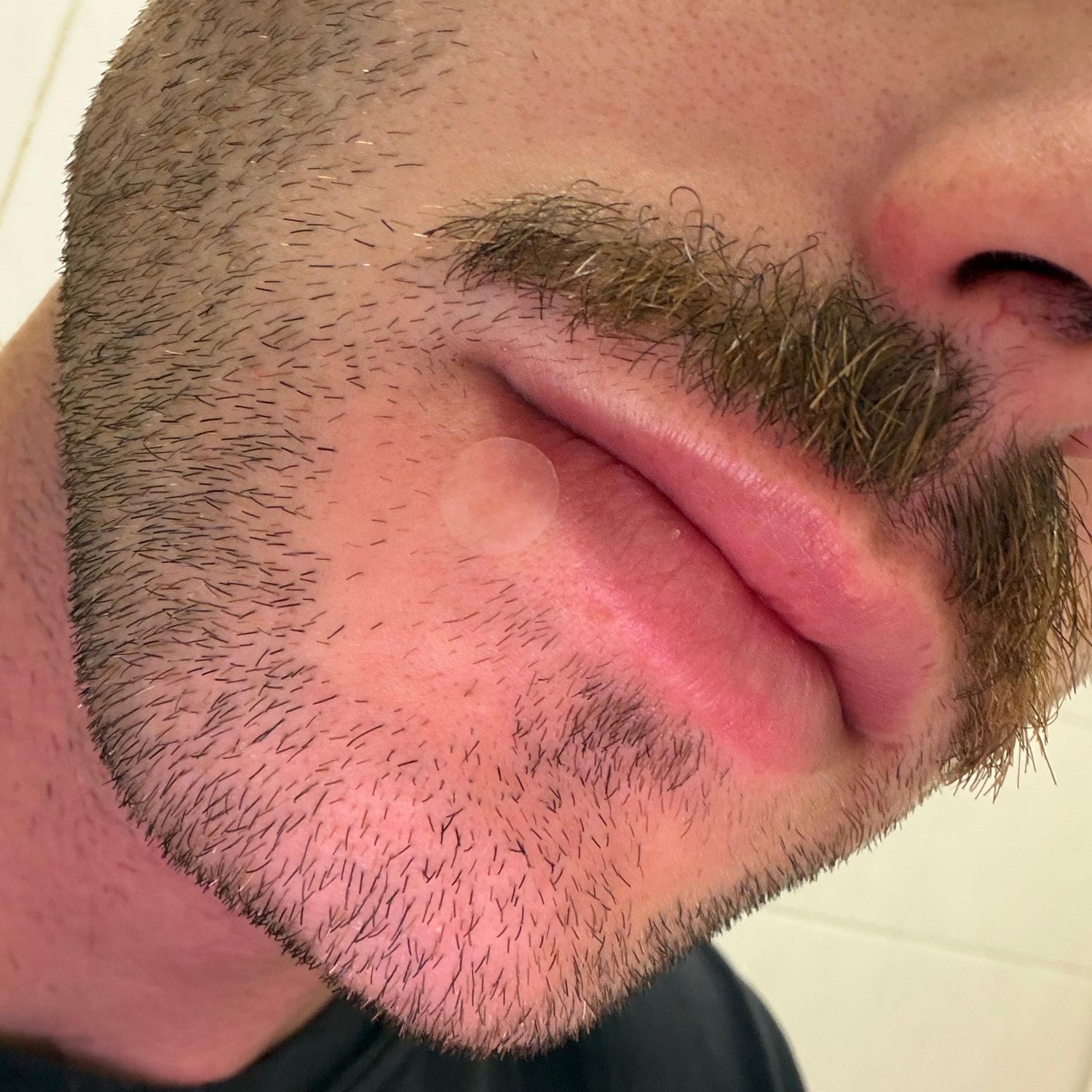
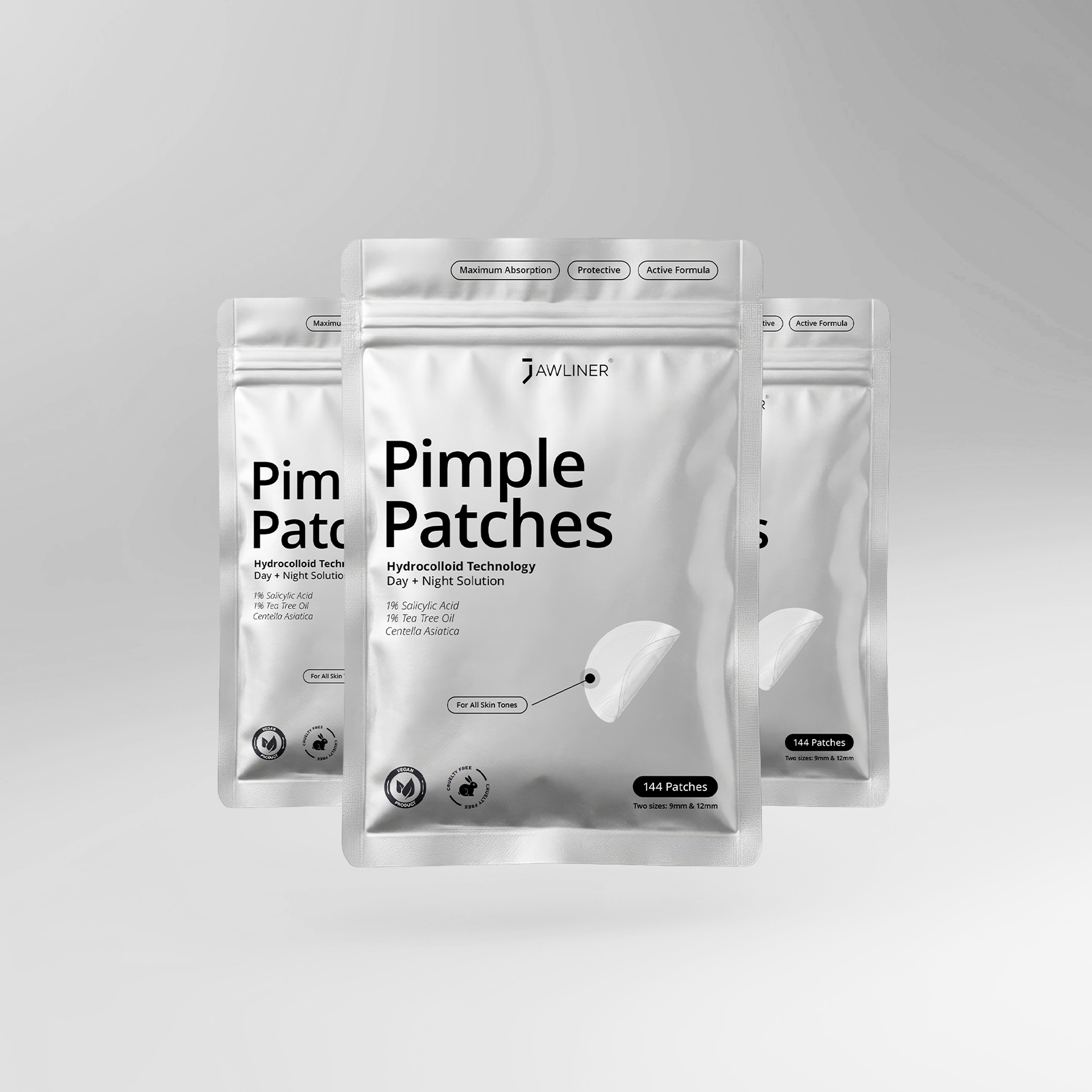
De snelste en meest verstandige stap is om het te camoufleren. De JAWLINER Pimple Patch zit discreet over de plek, absorbeert afscheidingen en houdt je vingers weg. ’s Nachts gedragen, is het puistje ’s ochtends vaak al platter. Je leest in detail waarom uitknijpen zo’n slecht idee is in ons artikel over puistjes uitknijpen.
Waarom krijg je puistjes op je kin?
Er is een bijzonder groot aantal talgklieren op de kin en langs de kaaklijn. Wanneer de huid te veel talg produceert en de poriën verstopt raken met dode huidcellen, ontstaat de ideale voedingsbodem voor ontstekingen. Verschillende factoren dragen hieraan bij:
- Hormonen: Schommelingen in hormoonspiegels stimuleren de talgproductie. Bij mannen spelen testosteron en het derivaat DHT een bijzonder belangrijke rol, omdat ze de talgklieren direct stimuleren.
- Scheren: Dagelijks scheren irriteert de huid, kan poriën verstoppen en leiden tot ingegroeide haartjes die ontstoken raken.
- Constant contact: We laten onze kin op onze handen rusten, raken deze aan tijdens het nadenken en houden onze smartphones tegen onze wangen. Elke keer worden bacteriën en vuil overgebracht op de huid.
- Stress en slaaptekort: Beide kunnen de hormoonbalans beïnvloeden en puistjes verergeren.
- Dieet: Voor sommige mensen kunnen voedingsmiddelen met veel suiker of zeer vette voedingsmiddelen hun huid beïnvloeden, hoewel dit sterk varieert per persoon.
Wat betekenen puistjes op de kin? Fact-Checking Face Mapping
Je hebt misschien wel eens gehoord van face mapping. Het idee erachter is dat de locatie waar een puistje verschijnt, zogenaamd de onderliggende oorzaak onthult. De kin wordt vaak geassocieerd met hormonen of spijsvertering.
Er zit enige waarheid in: Puistjes in het onderste derde deel van het gezicht – dat wil zeggen, op de kin en kaaklijn – komen inderdaad vaak voor in verband met hormonale schommelingen. De bredere opvatting dat een specifiek gezichtsgebied vast verbonden is met een bepaald orgaan, is echter niet wetenschappelijk bewezen.
Een praktischere benadering is daarom om nuchter te blijven. In de overgrote meerderheid van de gevallen is een puistje op de kin simpelweg het resultaat van overtollig talg, verstopte poriën en irritatie – geen teken van een ongezond orgaan.
Hulp bij Terugkerende Puistjes op de Kin
Een acuut puistje is één ding; terugkerende puistjes zijn iets anders. Deze basisprincipes helpen je verder:
- Mild reinigen: Twee keer per dag met een mild product, zonder de huid droog te scrubben. Te agressieve reiniging veroorzaakt alleen maar verdere irritatie.
- Niet uitknijpen: Hoe moeilijk het ook is, uitknijpen verlengt het probleem en riskeert het achterlaten van puistjes. Camoufleren is het zachtere alternatief. Dat geldt in het bijzonder voor onderhuidse puistjes, waar sowieso niets uit te knijpen valt.
- Vertrouw op milde actieve ingrediënten: Salicylzuur en tea tree olie behoren tot de bekendste middelen voor een onzuivere huid. De JAWLINER Pimple Patch bevat beide ingrediënten.
- Blijf er met je handen af: Doe een bewuste poging om je kin minder vaak aan te raken en desinfecteer je smartphone regelmatig.
Belangrijk: Als de puistjes op je kin ernstig, pijnlijk of aanhoudend zijn, moeten ze door een professional worden behandeld. Een dermatoloog kan de oorzaak vaststellen en een gerichte behandeling bieden.
Puistjes op de Kin bij Mannen: Baard en Scheren
Voor mannen staat de kin voor een dubbele uitdaging. Naast een gebied dat van nature rijk is aan talg, belast dagelijks scheren de huidbarrière. Het resultaat zijn geïrriteerde plekken, ingegroeide haartjes en puistjes precies waar het scheermes passeert.
Een paar dingen kunnen een merkbaar verschil maken. Scheer met een scherp mes in de richting van de haargroei, gebruik voldoende glijmiddel zoals scheerschuim of olie, en vermijd meerdere keren over dezelfde plek te gaan. Het is het beste om direct na het scheren een pimple patch aan te brengen op een schone, droge huid – dan blijft deze het meest betrouwbaar zitten. Meer over geïrriteerde huid na het scheren vind je in ons artikel over scheerbrand.
Veelgestelde Vragen over Puistjes op de Kin
Opmerking
Dit artikel is uitsluitend bedoeld voor algemene informatiedoeleinden en is geen vervanging voor medisch advies. Als je ernstige, pijnlijke of aanhoudende acne hebt, raadpleeg dan een dermatoloog.


