



The most stubborn myth first: blackheads are not dirt. Scrub them and you are treating a problem that does not exist, while damaging your skin in the process. What actually sits in the pore, and why it is dark, decides which method helps and which one does damage.
What a Blackhead Actually Is
A blackhead is an open comedo. Sebum and dead skin cells build up in the pore and form a plug. Because the pore is open at the top, that plug meets air and oxidises. The dark colour is a chemical reaction, not dirt. That is why scrubbing achieves nothing: there is nothing there to wash off.
Three things get mixed up in everyday language but need different treatment:
- Blackheads, open comedones: dark dot, pore open, not inflamed.
- Whiteheads, closed comedones: a small whitish bump under the skin, pore sealed. The deeper version of that is covered under blind pimples.
- Inflamed pimples: red, swollen, often painful. Here an inflammation has joined in.
The distinction is not academic. What helps an inflamed pimple does nothing for a blackhead, and the other way round.
Blackheads on the Nose Are Usually Not Blackheads
This is where most guides stop and where the skincare industry makes good money. Look at your nose from ten centimetres away and find dozens of small grey dots, and those are almost always not blackheads but sebaceous filaments.
Sebaceous filaments are part of every healthy skin. They are the channel that carries sebum from the gland up to the surface. You can squeeze them out or pull them off with a strip, but they come back, because the gland keeps working. Within two or three days they are full again.
The practical difference: blackheads sit individually, are clearly darker and feel like a bump. Sebaceous filaments sit evenly across the whole nose, are grey rather than black, and cannot be felt as a bump. Fighting sebaceous filaments means fighting your own skin structure.
How to Remove Blackheads: What Actually Works
Because the plug is made of sebum and skin cells, only what targets exactly that will work:
- Salicylic acid: oil-soluble, which is the only reason it gets into a pore that is full of sebum. Low-concentration products are meant for daily use, stronger ones for two or three times a week.
- Retinoids: they slow the excess shedding that clogs the pore in the first place. Start with two applications a week and build up slowly, or the skin reacts with redness and flaking.
- Regular, mild cleansing: morning and evening is enough. Cleansing more often or more aggressively dries the skin out, and dry skin tends to produce more sebum.
- Patience: skin renews over several weeks. Before a month is up you cannot tell whether a routine is working.
On the common home remedies for blackheads: a steam bath softens the plug and makes the pore briefly more accessible. That is the entire effect. Toothpaste and baking soda shift the skin's pH and irritate it. They do not belong on your face.
Squeezing Blackheads, and What Else Makes It Worse
This is where most people do more damage than the blackheads ever would:
- Squeezing blackheads: with fingernails you push part of the contents down rather than out. A comedo that was not irritated becomes inflamed, and an inflammation can leave a scar. There is more on that under popping a pimple.
- Pore strips: what comes off on the strip is mostly sebaceous filaments, exactly what belongs in a healthy pore. In exchange they pull at the skin barrier, and in two or three days everything looks as it did.
- Harsh scrubs: abrasion does not reach the plug at all, it only injures the surface. A chemical exfoliant works better here than a mechanical one.
- Comedone extractors: a usable tool in a trained hand. Without practice it leads to pressure marks and scars. If at all, then on pre-softened skin and without force.
- Heavy oils and creams: products that form a dense film on the skin can block sebum flow further.
Beard, Shaving and Blackheads on the Chin
In the beard area two things meet: shaving irritates the skin regularly, and beard oils and balms sit on exactly the pores that clog easily. If that is your problem area, the causes are under pimples on the chin, and what matters in beard care is in our guide to growing a beard.
Why Patches Do Nothing for Blackheads
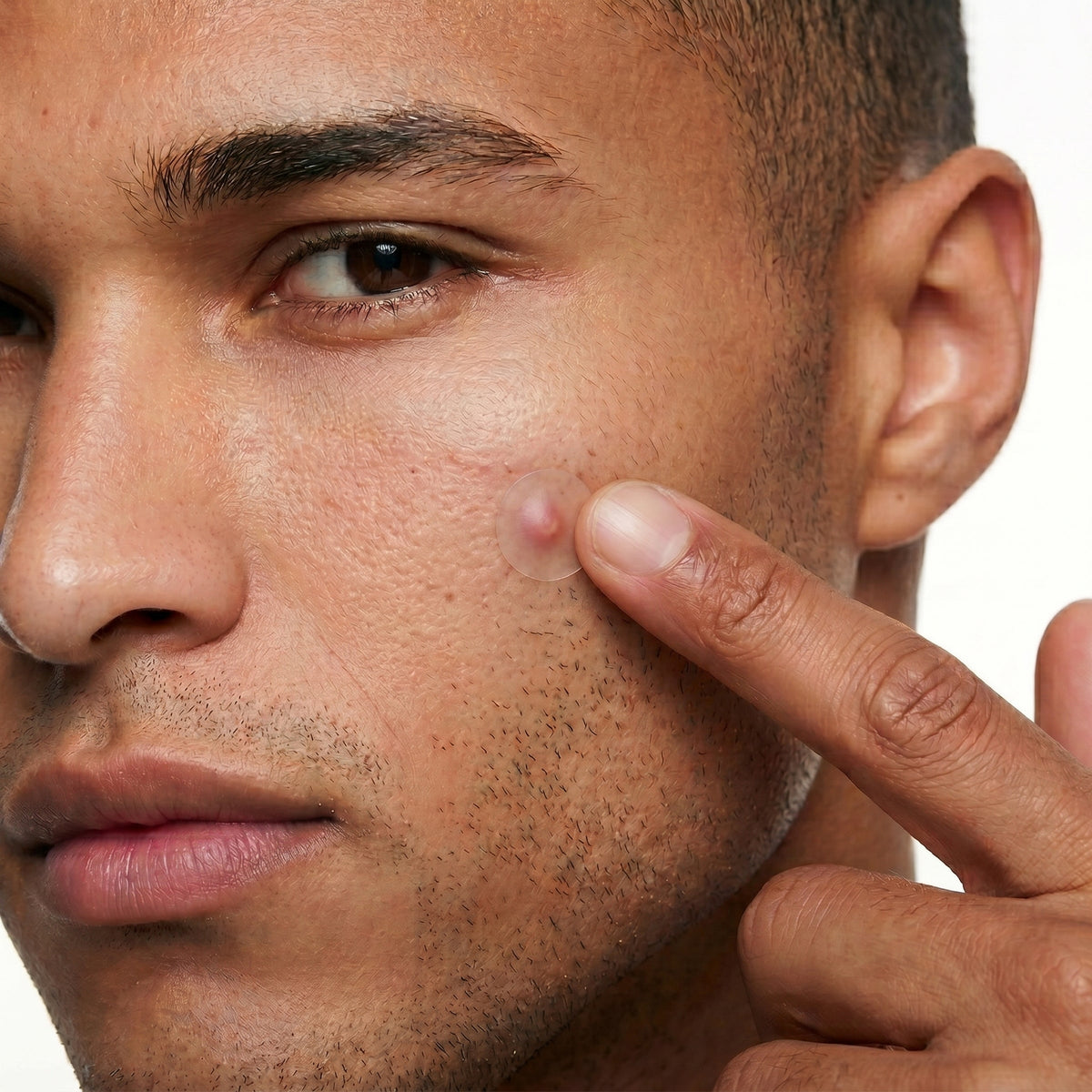
We sell pimple patches ourselves and still say clearly that they do nothing here. A hydrocolloid patch draws fluid from an open, inflamed spot and protects it from being touched. A blackhead is not inflamed and does not weep. There is nothing there for a patch to absorb.
What patches do work for is an inflamed pimple with a visible head, especially overnight and especially if you would otherwise pick at it. That is a different use case from blackheads, and buying them for this one ends in disappointment.
When to See a Dermatologist
A few blackheads are not a reason for an appointment. It becomes one when blackheads are spread across face, back or chest. The same goes for inflamed nodules or scarring. And for skin that suddenly gets worse in adulthood after years of being calm. Prescription retinoids and azelaic acid belong in that conversation, not in a guide.


