




Imagine two job applicants. Same resume, same grades, same experience. In the end, one of them is more likely to get the job, the better salary, and the warmer welcome. Why is that? Sometimes it’s simply because of their looks.
This phenomenon has a name: Pretty Privilege. In this article, we’ll explore exactly what’s behind it, how strong the effect really is, and what the research has to say about it.
TL;DR: Pretty Privilege at a Glance
- Pretty Privilege describes how attractive people are often treated preferentially in everyday life—both at work and when dating.
- The driving force behind this is the halo effect, a cognitive bias: We unconsciously infer other positive traits from a beautiful face.
- The effects are well documented, but they’re usually moderate and depend heavily on the context.
- We’re talking about statistical averages across large groups, not a judgment on individual people.
What You Can Influence Yourself
A honest thought before we dive into the studies. Some aspects of your appearance are simply a given, while others you can actively work on. Two factors that noticeably contribute to a man’s overall impression are a prominent jawline and clear skin:
- With the JAWLINER Chewing Gum, you train your chewing muscles against resistance—essentially, strength training for your face.

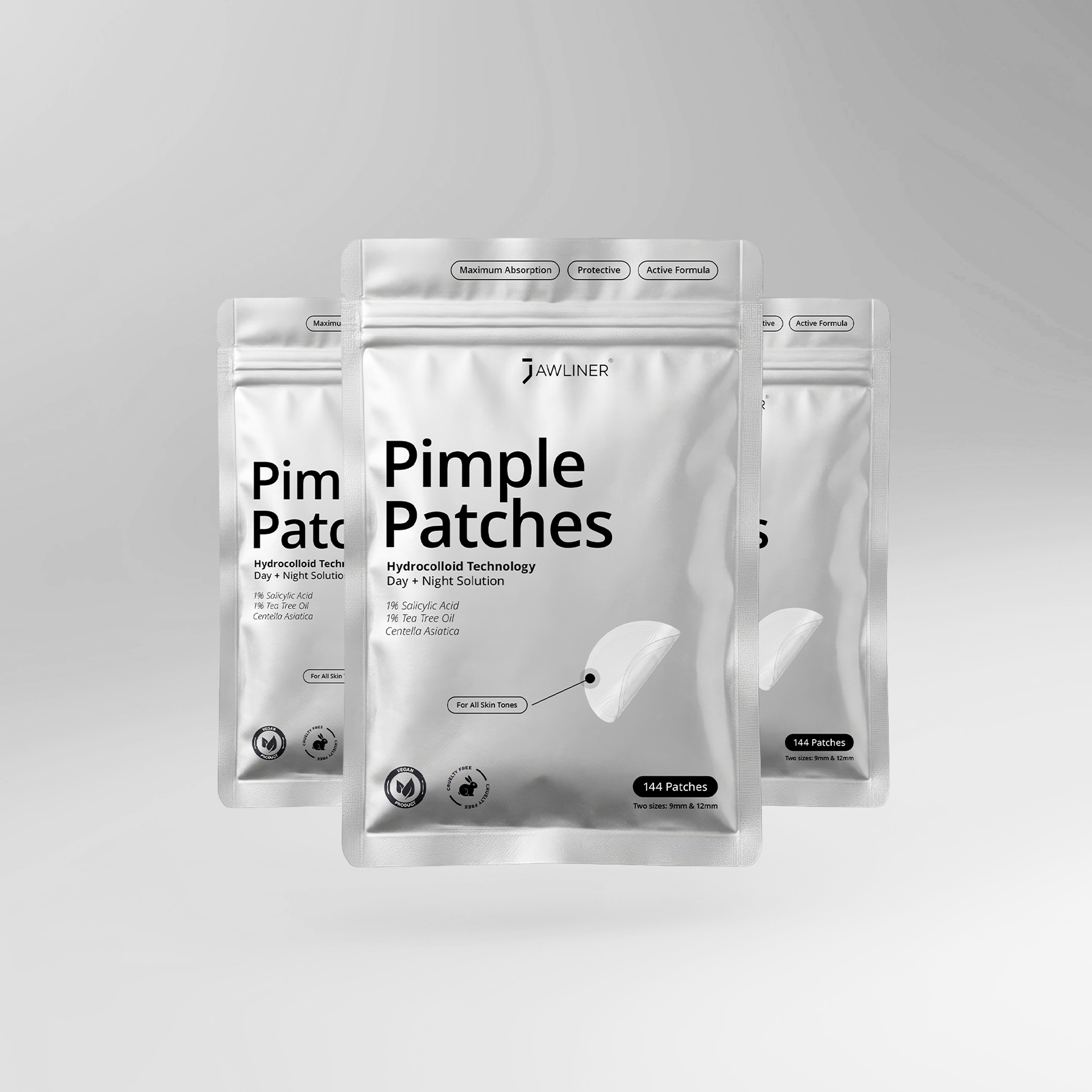
- And if a pimple does pop up, the JAWLINER Pimple Patch discreetly covers it, visually calms the skin’s appearance, and keeps you from picking at it.
No one is promising miracles here. It’s about the areas you can actually control.
What Is Pretty Privilege?
Pretty Privilege describes a simple but uncomfortable correlation. People who are perceived as attractive often enjoy advantages in everyday life that have nothing to do with merit.
This ranges from a friendlier smile at the register to a promotion at work. Of course, this isn’t a law—rather, it’s a pattern that researchers have been measuring in studies for decades.
In short: Attractive people have an easier time in many situations. Not because they’re more capable, but because others subconsciously have higher expectations of them.
The Halo Effect: Why We Infer “Good” from “Beautiful”
The driving force behind Pretty Privilege is the halo effect. The term comes from psychology:
- A “halo” is a halo of light. What this means is that a striking positive trait radiates onto everything else. When we see an attractive face, we unconsciously infer qualities that actually have nothing to do with it. Intelligence, for example, or friendliness, success, and trustworthiness.
Dion, Berscheid, and Walster provided the classic example of this as early as 1972. Their study is aptly titled “What is beautiful is good.” Participants were shown only photos of strangers and automatically attributed better character traits to the attractive ones. The face was the only information they had.
You’ll find an example of the halo effect in everyday life with every first impression. Whether it’s a date or a job interview, within seconds, an image forms that is surprisingly difficult to correct.
What the Research Shows
“Pretty Privilege” sounds like a bold claim at first. However, attractiveness research provides surprisingly solid data on this, drawn partly from economics and partly from psychology.
At Work and in Salary
The best-known study comes from economists Hamermesh and Biddle. As early as 1994, they demonstrated in the *American Economic Review* that more attractive people earn more on average, while those rated as less attractive face a measurable disadvantage.
Even more telling is a long-term study by Scholz and Sicinski from 2015. They analyzed old high school photos and tracked the careers of the subjects over decades. Their finding: One standard deviation of “greater attractiveness” was associated with an income that was about 2 to 3 percent higher for men.
Doesn’t sound like much? Over an entire working life, that adds up to a hefty sum of money.
In social perception
The effect doesn’t stop at salary. A large meta-analysis by Langlois and her colleagues in 2000 pooled over 900 individual studies. The conclusion was clear: Attractive people are consistently perceived as more competent, socially skilled, and even healthier.
This pattern is so consistent that scientists have given it its own name: the attractiveness stereotype. Earlier meta-analyses, such as the one by Eagly and her colleagues from 1991, reached similar conclusions.
Even in the Age of Beauty Filters
One might assume that the effect is losing strength in the age of Facetune and Instagram filters. In fact, the opposite is true.
A recent study by Gulati and colleagues published in *Royal Society Open Science* in 2024 once again confirmed the halo effect. With 2,748 participants and 462 faces, the researchers reached a clear conclusion: More attractive faces are still perceived as more intelligent, trustworthy, sociable, and happy.
Does “Pretty Privilege” Apply to Men, Too?
In short: yes. Although most of the early research focused on female faces, the bonus applies just as much to men.
An intriguing question is what actually makes a male face appear attractive. The perception of masculinity and dominance plays a central role here.
In a 2018 study with 922 participants, Mogilski & Welling found that the jawline is one of the most important features for a masculine-looking face, even more so than cheekbones or eyes.
- This aligns with a 2015 meta-analysis by Geniole and colleagues: a wider face—measured by the ratio of width to height—is perceived as more dominant.
- And in real-life speed dating, it was precisely this feature that made men more attractive for short-term relationships, as a 2014 study by Valentine and colleagues showed.
We’ve broken down in detail just how much the jawline contributes to attractiveness and what can be done to influence it in a separate article on the science behind a prominent jawline.
The flip side: How to interpret “pretty privilege”
As clear as the data is, it’s still important to put it into context. Otherwise, a skewed picture can quickly emerge. There are three points you should keep in mind:
- These are statistical averages based on large groups. They say nothing about an individual person, and certainly nothing about their worth.
- The effect sizes are usually moderate and depend heavily on context. In first impressions, attractiveness carries significantly more weight than in a long-term working relationship, where competence has long since spoken for itself.
- The halo effect is a cognitive bias in the observer’s mind. It describes how we perceive others, not how those people actually are.
What You Can Do with Your Knowledge of Pretty Privilege
The most honest answer is: There are parts of your appearance you can’t change, but there are others you certainly can.
You can’t tinker with the basic structure of your face. But you can work on many aspects surrounding it. Posture, well-cared-for skin, a beard that suits your face, plus body fat and muscle tone. All of this is within your control and influences how you come across. You can even train your facial muscles, just like any other muscle in your body. That’s what our JAWLINER tools are for.
Just make sure your expectations are realistic: A toned jawline won’t make you more successful overnight. It’s one of many building blocks you can work on yourself, rather than letting the idea of unfair advantages hold you back.
Frequently Asked Questions About Pretty Privilege
Sources
- Dion, K., Berscheid, E., & Walster, E. (1972). What Is Beautiful Is Good. Journal of Personality and Social Psychology, 24(3), 285–290.
- Hamermesh, D. & Biddle, J. (1994). Beauty and the Labor Market. American Economic Review, 84(5), 1174–1194.
- Eagly, A. et al. (1991). What Is Beautiful Is Good, But… A Meta-Analytic Review of Research on the Physical Attractiveness Stereotype. Psychological Bulletin, 110(1), 109–128.
- Langlois, J. et al. (2000). Maxims or Myths of Beauty? A Meta-Analytic and Theoretical Review. Psychological Bulletin, 126(3), 390–423.
- Valentine, K. A., Li, N. P., Penke, L., & Perrett, D. I. (2014). Judging a Man by the Width of His Face: The Role of Facial Ratios and Dominance in Mate Choice at Speed-Dating Events. Psychological Science, 25(3), 806–811.
- Scholz, J. K. & Sicinski, K. (2015). Facial Attractiveness and Lifetime Earnings: Evidence from a Cohort Study. Review of Economics and Statistics, 97(1), 14–28.
- Mogilski, J. K. & Welling, L. L. M. (2018). The Relative Contribution of Jawbone and Cheekbone Prominence, Eyebrow Thickness, Eye Size, and Face Length to Evaluations of Facial Masculinity and Attractiveness. Frontiers in Psychology, 9, 2428.
- Geniole, S. N., Denson, T. F., Dixson, B. J., Carré, J. M., & McCormick, C. M. (2015). Evidence from Meta-Analyses of the Facial Width-to-Height Ratio as an Evolved Cue of Threat. PLOS ONE, 10(7), e0132726.
- Gulati, A., Martínez-Garcia, M., Fernández, D., Lozano, M. A., Lepri, B., & Oliver, N. (2024). What Is Beautiful Is Still Good: The Attractiveness Halo Effect in the Era of Beauty Filters. Royal Society Open Science, 11(11), 240882.


