



Small white pouches that sit under the lip are showing up everywhere right now. In the gym, on the pitch, on the night shift. Some contain tobacco, some contain nicotine, some contain nothing but caffeine, and retailers stack all of them on the same shelf. The names do not help: snus, nicotine pouches, energy pouches, caffeine snus.
This article sorts it out. What is actually in a caffeine pouch, where the line to snus runs, and what else works when you want your caffeine without a cup and without a can.
The Short Answer
Caffeine pouches are small pouches made from plant fibres that you tuck between your lip and gum. They hold caffeine, flavourings and sweeteners, usually 30 to 100 mg of caffeine per pouch. There is no tobacco and no nicotine in them. A caffeine pouch is therefore not snus, even though it looks identical.
What Are Caffeine Pouches?
A caffeine pouch is a portion bag made from cellulose or other plant fibres. Inside sits a filling of caffeine, flavourings, sweeteners and usually a carrier that absorbs moisture.
You place it between your upper lip and your gum and leave it there for 15 to 30 minutes. During that time part of the caffeine dissolves and is taken up through the oral mucosa, and the rest goes down with your saliva into the digestive tract. Afterwards you take the pouch out and bin it. It does not dissolve.
Doses on the market usually sit between 30 and 100 mg per pouch. For scale: an espresso carries around 80 mg, a 250 ml energy drink roughly the same. A pouch at the low end of the range is well below a cup of coffee, one at the top end slightly above it.
You will find the same products under several names. Pouch brands say energy pouches, snus retailers say caffeine snus, some sellers say caffeine bags. Why that is, further down.
Snus, Nicotine Pouches and Caffeine Pouches: What Actually Differs
The most common mistake in this topic is treating the pouch as the product. The pouch is only the format. It tells you nothing about what is inside.
Two separate questions are what matter. Does it contain tobacco? And does it contain nicotine? That gives you four groups, not two.
| Product | Tobacco | Nicotine | Active ingredient |
|---|---|---|---|
| Snus | yes | yes | nicotine |
| Chewing bags | yes | yes | nicotine |
| Nicotine pouches, nicopods | no | yes | nicotine |
| Nicotine-free pouches, herbal and flavour bags | no | no | none |
| Caffeine pouches, energy pouches | no | no | caffeine |
- Snus is a tobacco product from Sweden. Moist, finely ground tobacco, loose or in portion bags, with nicotine from the tobacco plant.
- Chewing bags also contain tobacco, processed and marketed differently.
- Nicotine pouches, often sold as nicopods, contain no tobacco. The nicotine is added to the pouch separately. From the outside they are indistinguishable from a caffeine pouch.
- Nicotine-free pouches without any active ingredient exist too. They are essentially flavourings, herbs and sweeteners, and some people use them as a habit replacement.
- Caffeine pouches sit in that same nicotine-free group but do carry an active ingredient. In food law terms they are supplements.
One practical note to close this section: do not go by the product name. Labelling in this market is inconsistent. What is inside is on the ingredients list, and that is the only reliable place to check.
Why Caffeine Pouches Get Called Caffeine Snus
The name does not come from the product. It comes from the shelf.
- A large share of caffeine pouches is sold through snus and tobacco retailers, online and in shops. Those retailers serve customers who came looking for snus, and they name their range accordingly. A caffeine pouch becomes caffeine snus, despite containing neither tobacco nor nicotine.
- The same goes for the other labels you will run into. Energy pouches is what the pouch brands themselves prefer. Zero snus means nicotine-free at one seller and tobacco-free but nicotine-containing at the next. None of these terms works as a guide.
So if you are searching for caffeine snus, you are very probably after a product with no nicotine in it. The name only tells you where it is sold.
Alternatives to Caffeine Pouches Compared
The pouch is one of several ways to take caffeine without a drink. What all the oral formats share: they stay in your mouth for a while, part of the caffeine is taken up through the oral mucosa, and you need no water and no equipment.
| Format | Caffeine | Time in the mouth | Nicotine | Left over |
|---|---|---|---|---|
| Caffeine pouch | 30 to 100 mg | 15 to 30 minutes | no | the pouch |
| Chewing gum with added caffeine | 40 mg per piece | 15 to 20 minutes | no | the gum base |
| Hard candy with caffeine | up to 200 mg per piece | until it dissolves | no | nothing |
| Espresso | around 80 mg | none | no | a cup |
| Energy drink, 250 ml | around 80 mg | none | no | a can |
| Mate, 0.5 litres | around 100 mg depending on brand | none | no | a bottle |
Chewing Gum With 40 mg
The closest match in format. The gum stays in your mouth, the base holds, and the caffeine comes out gradually across 15 to 20 minutes. The rhythm is similar to a pouch, without anything sitting under your lip.
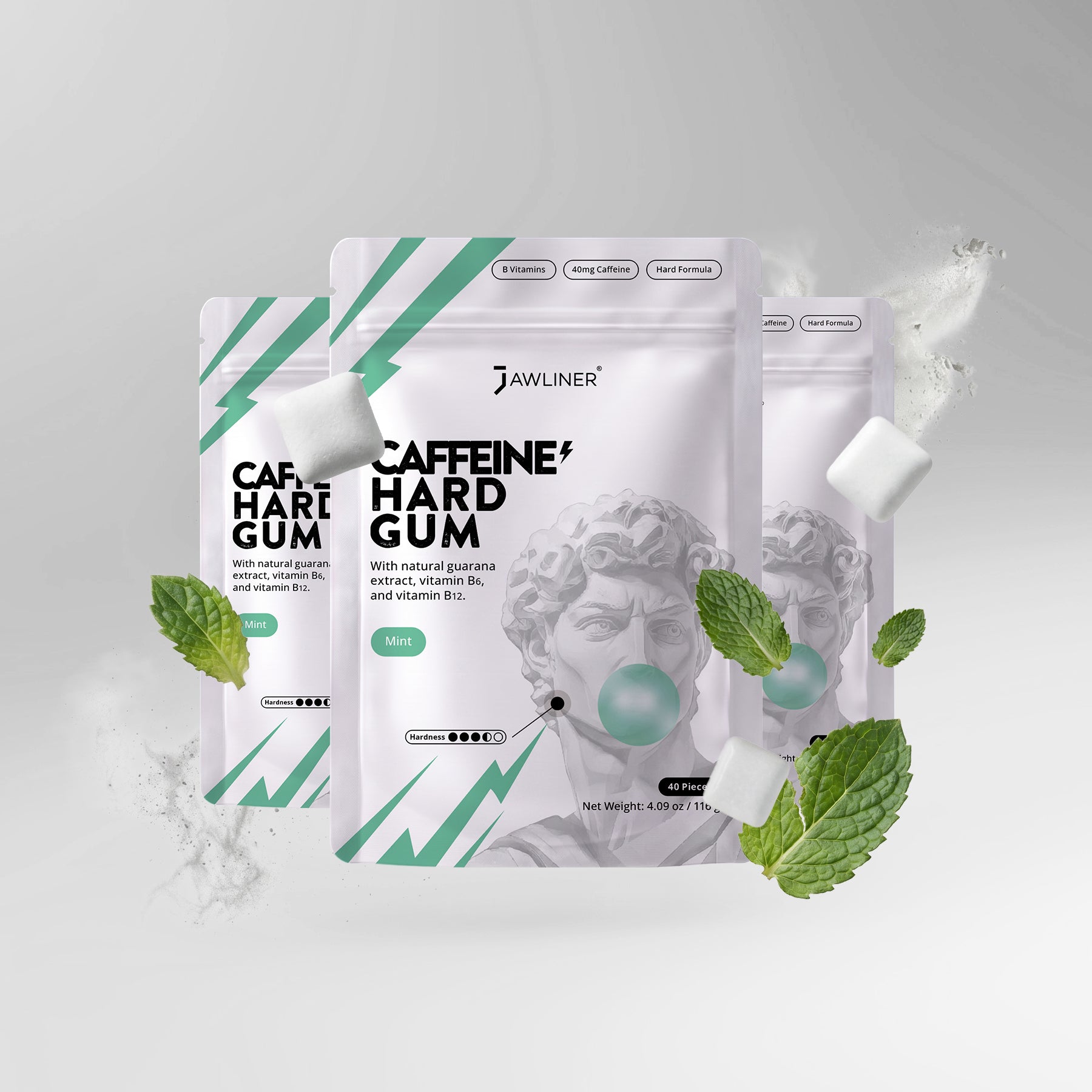
JAWLINER Chewing Gum Hard + Caffeine has 40 mg per piece from guarana extract, plus vitamin B6 and B12. The hard version also gives your jaw muscles something to work against. There is more on the format in our guide to how caffeine gum works.
Hard Candy With 200 mg
The opposite of a pouch. Instead of a small portion spread over half an hour you get one high single dose, and afterwards nothing is left. No pouch, no gum base.
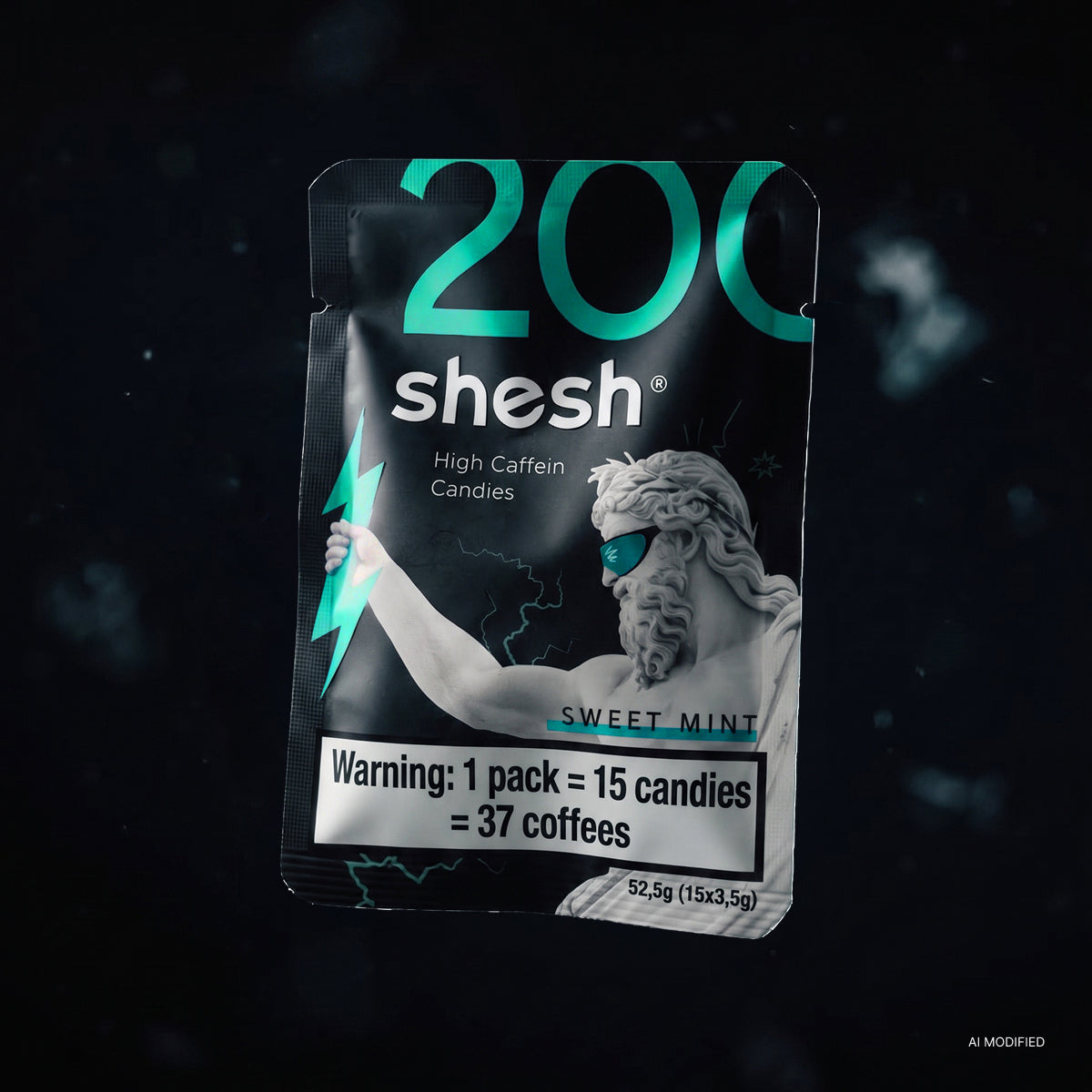
SHESH 200 has 200 mg per piece from a caffeine-rich green tea extract, roughly two and a half espressos. One piece is one serving and two is the daily maximum.
Coffee, Mate and Green Tea
If the oral format is not the point and you simply want caffeine without an energy drink, the drinks still work. Mate sits around 100 mg per half litre depending on brand, green tea well below that, an espresso around 80 mg per cup. The difference against every pouch, gum and lozenge is practical: you need liquid, usually a machine, and somewhere to drink it.
A selection of solid formats is in our caffeine snacks collection.
Pouches in Sport
The pouch format is widespread in team sport, football and ice hockey in particular, and it has been publicly discussed for several years now. Some of the players who are used to the format go looking for nicotine-free versions, and that is where the market for caffeine pouches and energy pouches came from.
For caffeine the same amounts apply regardless of format. Whatever you add up across the day from coffee, tea, energy drinks and solid formats goes into the same total. If you are taking caffeine specifically around training, our article on caffeine before exercise covers the timing. Where the daily limit sits is in the next section.
How Much Caffeine Per Day Is Safe?
EFSA considers single doses of up to 200 mg, and up to 400 mg spread across a day, unproblematic for healthy adults.
Translated into formats: four to thirteen pouches depending on strength. Ten gums at 40 mg. Two candies at 200 mg. Five espressos. In practice people mix, and that is where it gets murky. A morning coffee, an afternoon can and three pouches in the evening add up past the line quickly.
The advantage of a dosed format is not the amount, then. It is the number printed on the pack. You know what you are taking instead of guessing.
Who Should Avoid Caffeine Pouches and the Alternatives
- Caffeinated products are not suitable for children or adolescents.
- Pregnant and breast-feeding women should avoid high-dose caffeine products.
- If you are sensitive to caffeine, or have high blood pressure or a cardiovascular condition, speak to a doctor first.
- Do not combine them with other high-caffeine products or with alcohol.
- Keep them out of reach of children.
Caffeine Pouches FAQ
Note
This article is general information and does not replace medical advice. If you are unsure whether caffeine is right for you, or if you have any health concerns, speak to a doctor.


