





You optimize your diet, track every calorie, and work your butt off at the gym. But no matter how hard you train, your endurance stagnates and you often feel like you've been run over by a bus in the morning? Your problem is probably not your muscles, but your breathing.
The most important fuel for maximum performance is oxygen. If you breathe through your mouth while training or sleeping, your body is running with the handbrake on. Nasal breathing, on the other hand, is the key to true fitness. We'll show you why you're probably breathing wrong and how to get the most out of yourself with the right technique and tools.
Your upgrade for better nasal breathing: Jawliner Nose Tape as an instant solution
No matter how disciplined you are in training your breathing technique, your body is often the limiting factor. Especially during sleep, when your subconscious takes over, or during training, when your pulse is racing, the air through your nose becomes scarce.
The solution is Jawliner Nose Tape. We're not talking about a clunky medical device here, but a smart performance tool that mechanically opens your airways.
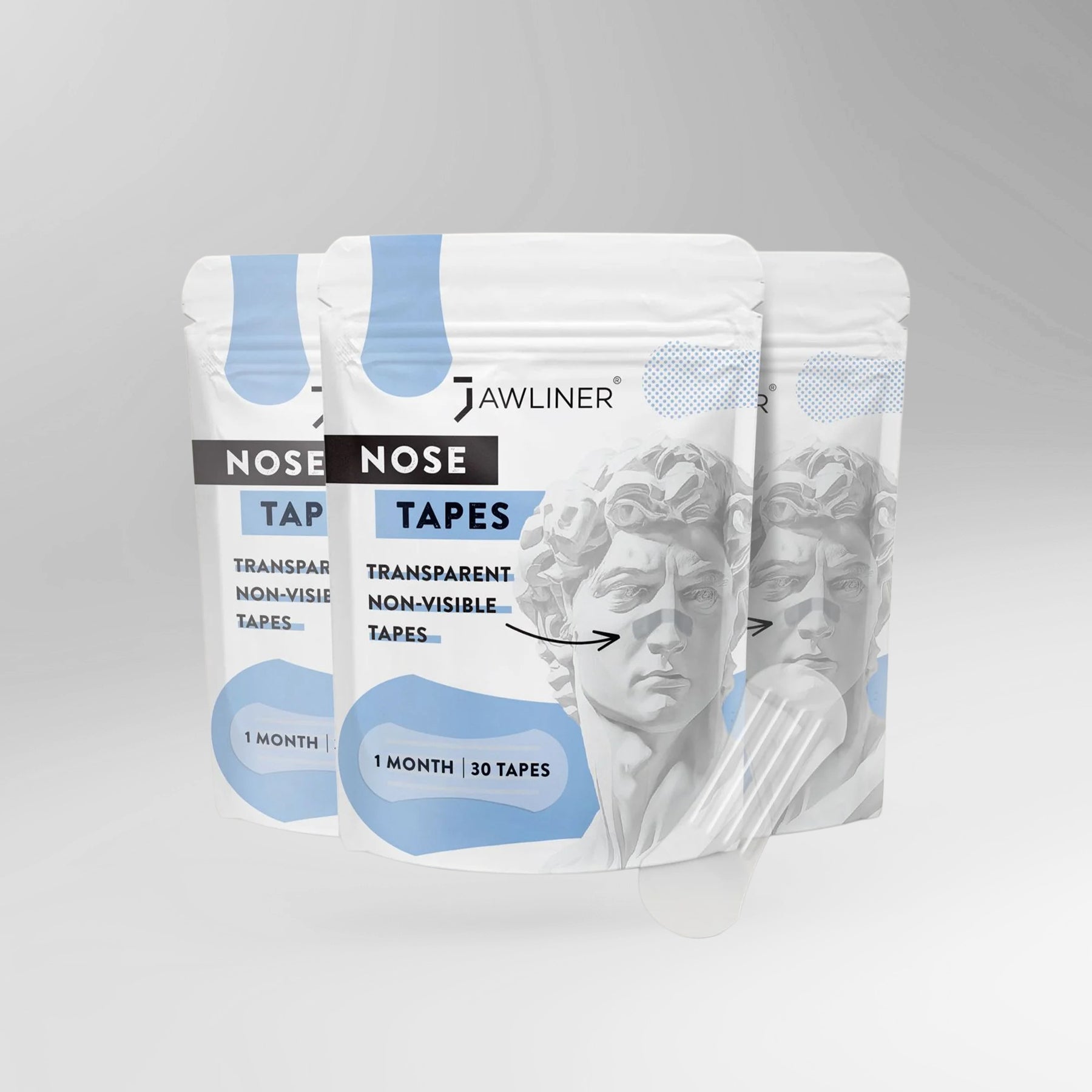
In bed, on your road bike, or at your desk, the tape gives you more breathing room right away:
- While sleeping: It widens the nasal passages and makes nasal breathing much easier. You get enough air so that your body no longer has any reason to open your mouth. This stabilizes your sleep phases and can reduce snoring.
- During training: Your nose is often the bottleneck here. Under high stress, the nostrils contract due to the strong suction. The nose tape acts as a support, keeping the passage clear and supplying your muscles with maximum oxygen without you having to switch to inefficient mouth breathing.
- In everyday life: More oxygen means more focus in your head.
JAWLINER Nose Tape is a small change with a huge impact. Get the upgrade to regenerate better at night and perform better during the day.
Benefits of nasal breathing: The legal cheat code for your workout

Your nose is a highly complex air conditioning and filtration system. If you really want to understand the benefits of nasal breathing, you need to look at what happens physiologically before the air reaches your lungs. Here's why nasal breathing takes your workout to the next level:
- The built-in filter: The air you breathe is full of dust, pollen, and bacteria. Your nasal hairs and mucous membranes act as the first line of defense. They trap foreign particles before they can cause any damage.
- The body's own air conditioning system: Cold, dry air is toxic to your respiratory tract. The nose warms the inhaled air and enriches it with moisture. This protects the sensitive tissue in the lungs and prevents irritation.
- Stress control: Your breathing controls your nervous system. Mouth breathing signals “fight or flight” to the body – pure stress. Nasal breathing, on the other hand, activates the parasympathetic nervous system. You stay focused, calm, and keep a cool head, even when the going gets tough.
- The super fuel nitric oxide (NO): This is the absolute game changer. The gas nitric oxide is produced in your sinuses. It not only sterilizes the air, but also dilates your blood vessels (vasodilation).
Scientific fact: The importance of nitric oxide for the cardiovascular system was so groundbreaking that Louis J. Ignarro, together with Robert F. Furchgott and Ferid Murad, received the Nobel Prize in Medicine for it in 1998. Nasal breathing transports this gas to the lungs, which can significantly improve oxygen uptake in the blood.
Impaired nasal breathing & oxygen deficiency: Why mouth breathing slows you down
This brings us to a point that 90% of all athletes misunderstand: the paradox of breathing. You may think that if you pant deeply through your open mouth, you will get more air and thus more power. The opposite is true.
Continuous mouth breathing leads to chronic hyperventilation. You exhale too much carbon dioxide (CO₂). And this is precisely where the problem lies, known as the Bohr effect.

The Bohr effect: Why oxygen doesn't reach your muscles
Your blood is full of oxygen, transported by hemoglobin (the red blood cells). However, in order for hemoglobin to deliver oxygen to your muscles and organs, it needs CO₂ in the blood.
- Mouth breathing: You exhale too much CO₂ and the oxygen does not reach where it is needed.
- The result: Impaired nasal breathing effectively leads to oxygen deficiency in the tissue due to increased mouth breathing, even though you are pumping air like a steam locomotive. Your endurance collapses and you become acidic more quickly.
Causes of problems with nasal breathing
You want to breathe through your nose, but it feels like nothing is getting through? That's frustrating, but it's no reason to give up. Before you optimize your breathing technique, we need to find out if your air intake is blocked. Here, we distinguish between structural problems and temporary obstacles.
Anatomical reasons
Sometimes the problem lies deep in the architecture of your face:
- Deviated septum: In many people, the partition between the nostrils is not perfectly straight. This can severely obstruct the airflow on one side.
- Nasal polyps: These are benign growths on the mucous membrane that act like small roadblocks in the nose.
- Chronic inflammation: Persistent sinusitis keeps the airways permanently swollen.
In these severe cases, no amount of tape will help. You need to take responsibility and see an ENT doctor. Find out whether medical treatment is necessary.
Environment & nasal care
However, the causes are often more harmless and can be found in your everyday life:
- Allergies: House dust or pollen cause the mucous membranes to swell.
- Dry air: Heated air dries out the nasal mucosa, causing it to crack and swell for protection.
Nasal care: The Jawliner tip
Treat your nose like a muscle – take care of it. A nasal rinse with lukewarm salt water often works wonders. It flushes allergens, dust, pollen, and mucus out of the nose, moisturizes the mucous membranes, and clears the way for clean air.
Improve nasal breathing: How to train your respiratory system
Most people breathe dysfunctionally. They pant shallowly into their chest instead of deeply into their diaphragm. If you want to improve your nasal breathing, you need to be disciplined. It's like muscle training: it feels difficult and unnatural at first, but over time your body adapts.
The hack for nasal breathing in everyday life
Pay attention to what your mouth is doing when you are concentrating on answering emails or scrolling through social media. In 90% of cases, it is slightly open.
- The “desktop tape” trick: It sounds radical, but it's extremely effective. For example, stick JAWLINER Mouth Tape on your mouth for an hour during the day when you're working on the computer. This reprograms your brain.
- When speaking: Many people frantically gasp for air through their mouths when talking. When speaking, make sure to take short breaks and consciously breathe in through your nose. This not only makes you appear more confident, but also keeps your stress levels down.
Practice nasal breathing during exercise

When you start breathing only through your nose while jogging or pumping iron, your performance will drop temporarily. This is normal. Your body is not yet efficient at using oxygen (see Bohr effect).
- The rule: Your breathing technique determines your pace. As soon as you feel the need to open your mouth, you are going too fast.
- Slow down: Force yourself to stay in the nasal area. After a few weeks, you will notice how your CO₂ tolerance increases and you suddenly remain much calmer at the same intensity.
Nasal breathing is the most honest indicator of true Zone 2 training (basic endurance). As long as you can breathe purely through your nose, you are working in the efficient aerobic zone, where your body burns fat and builds mitochondria. As soon as you have to open your mouth, you leave this zone and build up lactate. You are then often training too hard for your actual goal.
Conclusion: Breathe like a pro, perform like a pro
There are no more excuses. You now know that nasal breathing is your turbo boost for more endurance, focus, and health. Don't leave your breathing to chance, take it into your own hands. The change takes work, but the payoff is huge.
Start today with the breathing exercises, combine them with Jawline Training, and stock up on Jawliner Nose Tapes so you can feel the difference right away!


