



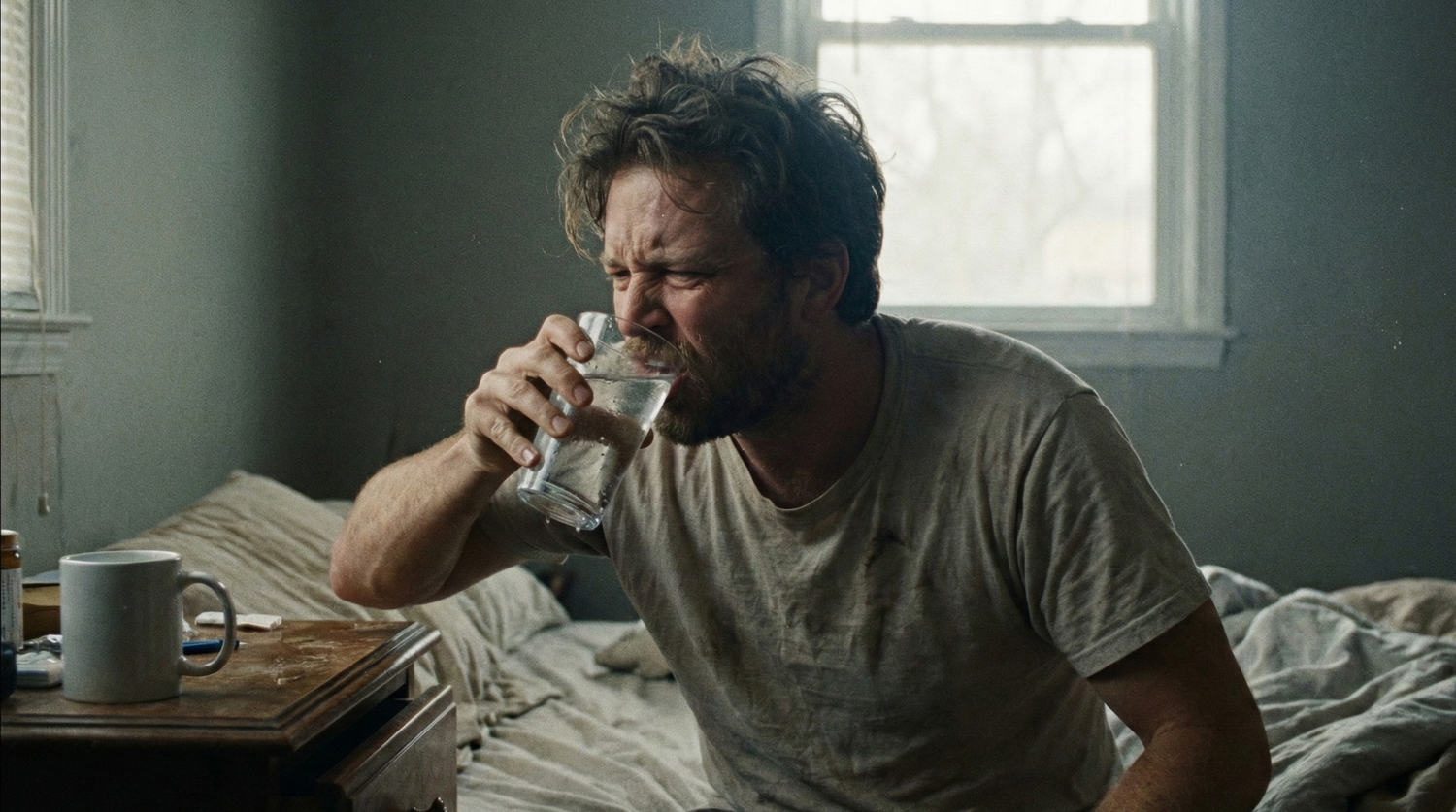
You know the feeling: the alarm clock rings, you want to swallow, but you can't. Your tongue sticks to the roof of your mouth, your throat burns like fire, and your lips are chapped. The first thing you reach for is a bottle of water, even before you can open your eyes properly and wake up.
Dry mouth (medical term: xerostomia) is more than just annoying. If you constantly have a dry mouth, it's a warning sign from your body. You are dehydrating overnight. The cause is usually a simple mechanical error: your mouth is wide open while you sleep. Here you can find out why this happens and what you can do about it.
Put an end to dry mouth: Jawliner® Mouth Tape as an immediate remedy

When your mouth is open at night (mouth breathing), your saliva evaporates. You can drink as much water as you want during the day – if you become a “mouth breather” at night, you will lose the battle against dryness.
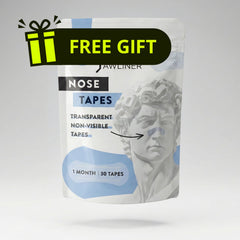
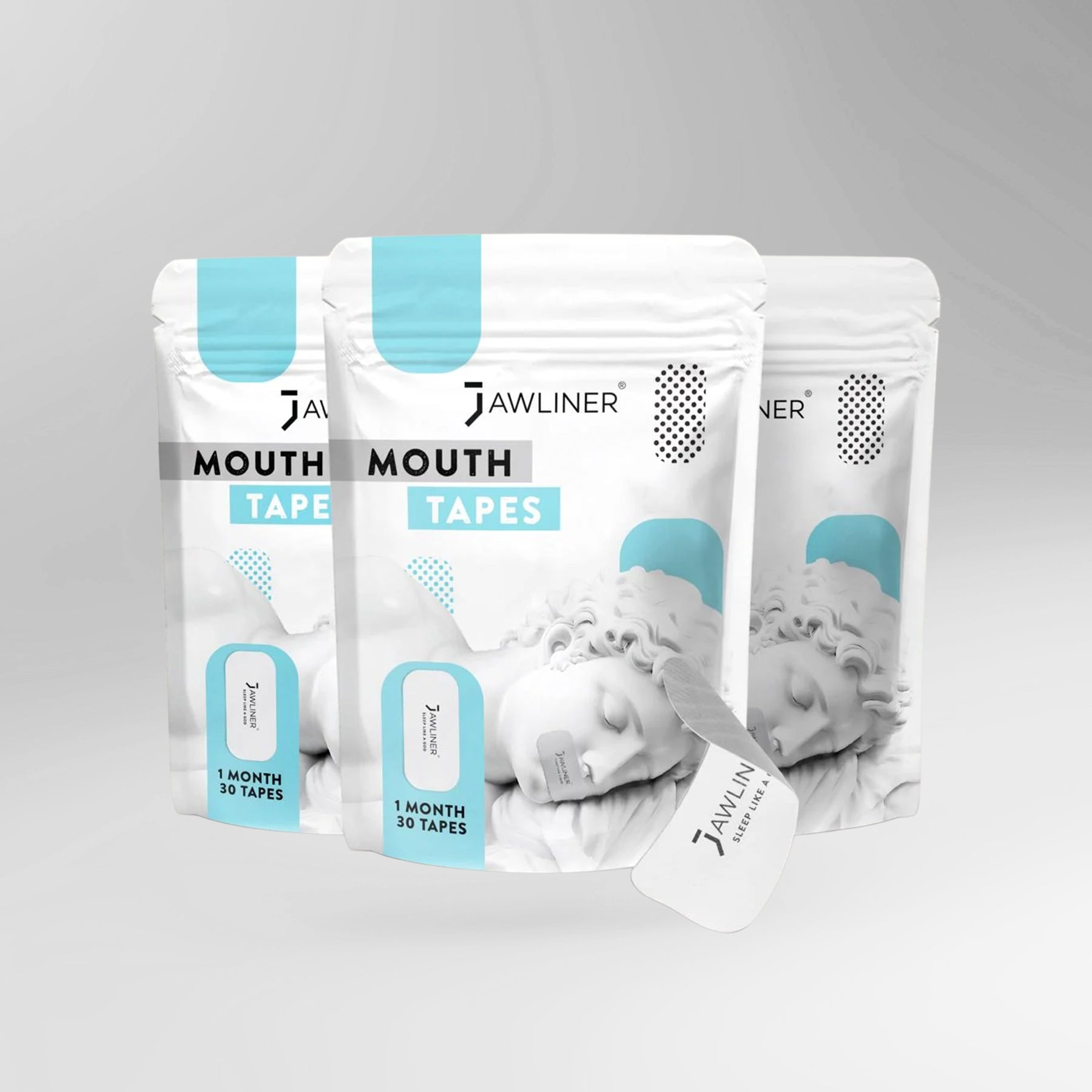
The solution is simple and effective: JAWLINER® Mouth Tape. It gently holds your lips together and forces your body to breathe healthily through your nose.
- The effect: Your mouth stays closed. The moisture stays in.
- The result: No dry mouth at night, healthy oral mucosa, and significantly fresher breath in the morning.
- Oral hygiene: Since saliva protects your teeth from acids and bacteria, the tape actively prevents tooth decay and bad breath.
Causes of dry mouth
Why does the mouth dry out in the first place? Normally, your salivary glands produce fluid around the clock. This is essential for survival: Saliva helps you taste food, makes it easier to speak and swallow, and neutralizes aggressive acids in the mouth.
When saliva flow dries up, there are usually clear reasons for this:
- Mouth breathing: This is the main reason in otherwise healthy adults. When you breathe through your mouth, your mouth cavity turns into a wind tunnel. Evaporation is faster than your body can produce saliva.
- Dehydration: If you don't drink enough water during the day, you won't have any reserves at night. Alcohol or salty food in the evening also deprive the body of fluid and cause a deficiency in the cells.
- Medical factors: It's worth taking a closer look here. Many medications (e.g., for high blood pressure, antidepressants, or antihistamines) have dry mouth as a known side effect.
- Diseases such as diabetes or Sjögren's syndrome (an autoimmune disease) can also impair gland function.
Dry mouth at night: Sleep as a risk factor

Why is dry mouth always worst in the morning? At night, your body puts all its systems into energy-saving mode. Saliva production is also naturally reduced. This is normal.
But if you breathe through your mouth, you have a problem. The little saliva that is left evaporates immediately. Your natural protective shield breaks down.
- Free rein for bacteria: Saliva is your best protection against pathogens. Without it, bacteria multiply explosively. This leads to bad breath and greatly increases the risk of tooth decay and gum disease.
- Inflammation: Without moisture, the corners of the mouth become cracked and the oral mucosa becomes susceptible to inflammation and infections in the mouth area.
- Sleep killer: The body signals “drought.” You wake up because your throat is scratchy, you need to drink, and you interrupt your important deep sleep.
Pro tip: The jaw often drops down at night because the tongue is held in the wrong position during the day. Mewing can help to keep the jaw up in the long term and train you to stop breathing through your mouth.
Another common reason for sleeping with your mouth open is simply muscle weakness. Our modern diet is far too soft, and we hardly chew anything that offers any resistance. The result: your masseter (the large chewing muscle) atrophies.
Think of your jaw like any other muscle in your body. It needs stimulation. With our special Jawliner Fitness Chewing Gum, you can give your jaw the workout it needs.
Dry mouth & psyche: When stress dries out your mouth

Never underestimate your mind. Dry mouth and psyche are more closely linked than you think. Maybe you've experienced this: Before an important meeting or exam, you suddenly find yourself “out of spit.” That's pure biology.
When you feel worry, nervousness, or stress, your body switches into “fight or flight” mode. It focuses all its energy on your muscles and heart. Digestion—and with it, saliva production—is shut down as non-essential for survival.
The effect on your sleep: If you are under stress during the day, you take that tension with you to bed. This often leads to restless sleep, teeth grinding, and hectic breathing through the mouth. A dry mouth in the morning is therefore often a physical symptom of mental problems or overload.
Dry mouth: When to see a doctor?
In most cases, mouth breathing is the culprit. But sometimes there is more to it than that. If taping and drinking more water do not help, you should have a professional take a look.
See an ENT doctor or your dentist if:
- You have difficulty swallowing despite breathing through your nose.
- Your tongue burns or you constantly have infections in your mouth.
- You feel lumps in your salivary glands.
In these cases, professional examinations are necessary to find the right treatment options. For most people affected, however, the problem is mechanical and the solution is on the bedside table.
Conclusion: Tape it on, close your mouth
If you want to combat dry mouth, you have to get to the root of the problem. Drinking plenty of fluids and sucking on candies are good remedies for the day, but they don't solve the problem at night.
The most effective treatment for nighttime dehydration is simple: keep your mouth closed. Protect your teeth with JAWLINER® Mouth Tape, improve your mouthfeel, and start the day hydrated!


