




You have been taking creatine for two weeks, the scale is up by a kilo and a half, and your face looks softer in the mirror. The obvious explanation is that creatine makes you bloated. It is only half right. Creatine does bind water, just not where most people assume.
What Creatine Does With Water
Creatine is stored in the muscle cell as creatine phosphate and is osmotically active. It pulls water into the cell with it. The muscle becomes measurably fuller, and that cell volume effect is part of how creatine works, not an unwanted side effect.
It also explains the fast weight gain at the start. One to two kilograms in the first week is normal and consists almost entirely of water sitting in muscle tissue. Fat is not physiologically possible in that timeframe.
The Distinction That Matters: Inside the Muscle or Under the Skin
This is where the paths split, and it is the point most forum threads get wrong:
- Intracellular water sits inside the muscle cell. It makes the muscle look fuller and contours tend to sharpen. That is the effect creatine produces.
- Subcutaneous water sits between skin and muscle. It blurs contours and makes the face look soft. That is the effect salt, alcohol and too little sleep produce.
There is no good evidence that creatine pulls a meaningful amount of water under the skin. Visible softness in the face almost always comes from the second category, and that has other causes.
The Loading Phase Is Usually the Real Problem
The classic loading phase, twenty grams a day for five to seven days, fills the stores fast and moves the scale just as fast. A second factor usually rides along that nobody counts: creatine is often taken with grape juice or a carbohydrate shake, and many powders contain sodium. More carbohydrates and more sodium mean more bound water, this time outside the muscle cell too.
The alternative is unspectacular and works just as well: three to five grams a day with no loading phase. The stores are full after about three to four weeks, the weight increase spreads out and nobody notices it.
Does Creatine Really Make Your Face Look Fuller?
Honest answer: usually not the creatine itself. The cell volume effect applies to skeletal muscle, and there is comparatively little of it in the face. The masseter is skeletal muscle, but a visibly fuller face does not follow from that.
What does coincide: most people start creatine when they are starting a bulk anyway. More calories, more convenience food, more salt, often more alcohol at the weekend. Those are the factors that actually show up in the face. There is more on that in our guide to a puffy face.
Whether a changed face is water or fat can be told from the timeline: water comes and goes within days, fat changes over months. The full distinction is under face fat versus water retention.
What to Do If You Want Both
Taking creatine and keeping a defined face are not mutually exclusive:
- Skip the loading phase: three to five grams a day, continuously. Same result, no weight jump.
- Drink enough: creatine raises your fluid requirement. Short on water, the body holds on to what it has.
- Watch the sodium to potassium balance: the lever is not the creatine, it is the salt around it.
- Work with photos, not the scale: same light, same angle, every four weeks. In the first weeks the scale is mostly measuring water.
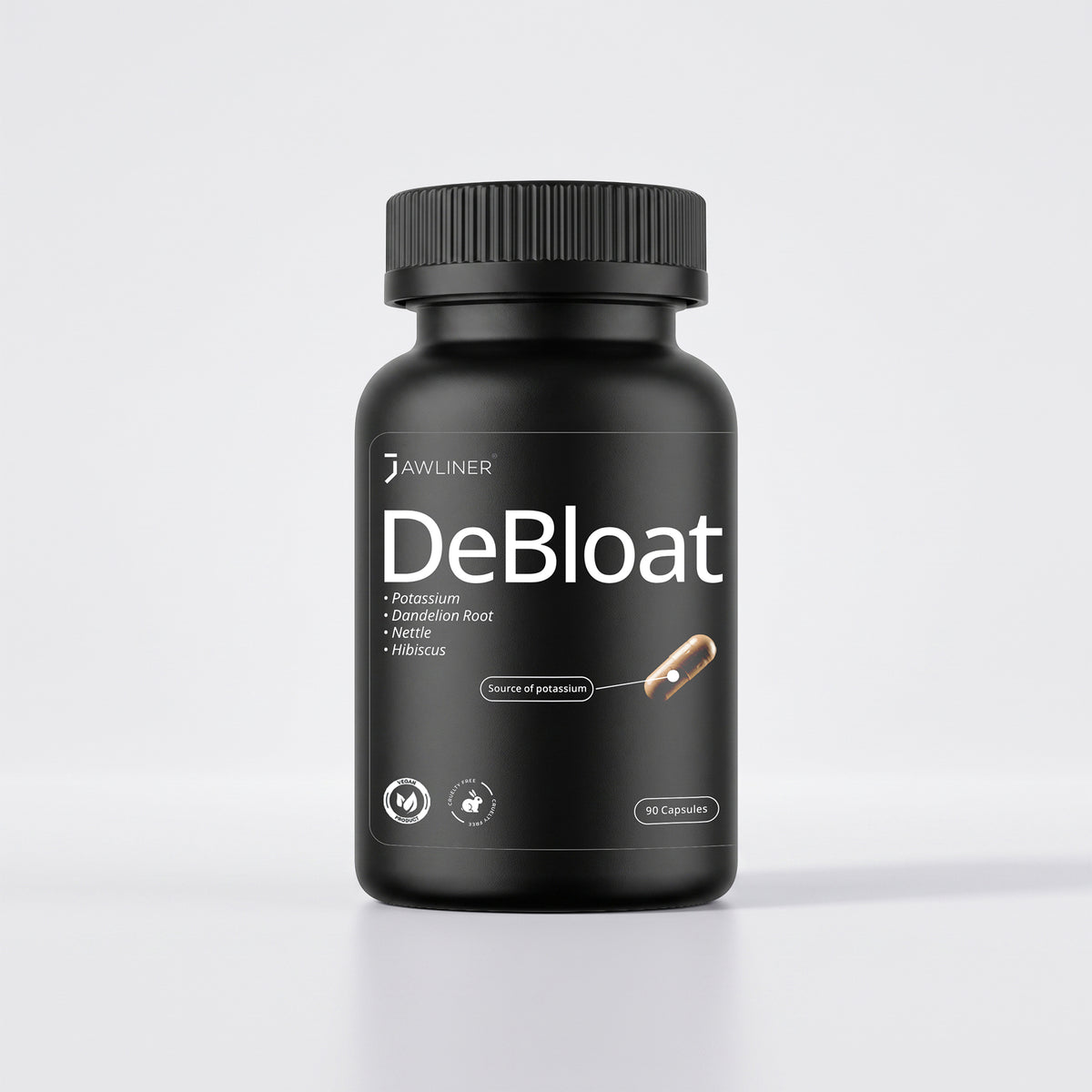
If you want potassium from a capsule on top of your food, there are 500 mg per serving in our JAWLINER DeBloat capsules. Potassium contributes to normal muscle function.
What Creatine Does Not Do
Three claims that keep going around:
- Kidney damage: not demonstrated in healthy people at the doses studied. Creatine is among the best researched supplements there is. Anyone with a known kidney condition should clear it with a doctor first.
- Dehydration and cramps: the assumption dates from the nineties and has not held up in studies.
- Hair loss: traces back to a single small study from 2009 that showed a rise in DHT. It was never replicated, and hair loss itself was not measured in it. The evidence does not support the claim.


